
Pack pattern
Define the product grouping, carton dimensions, orientation and loading sequence.
A conveyor-based case-loading layout with overhead product handling.
Enquire about this machineMachine & device catalog · Configuration agreed per project
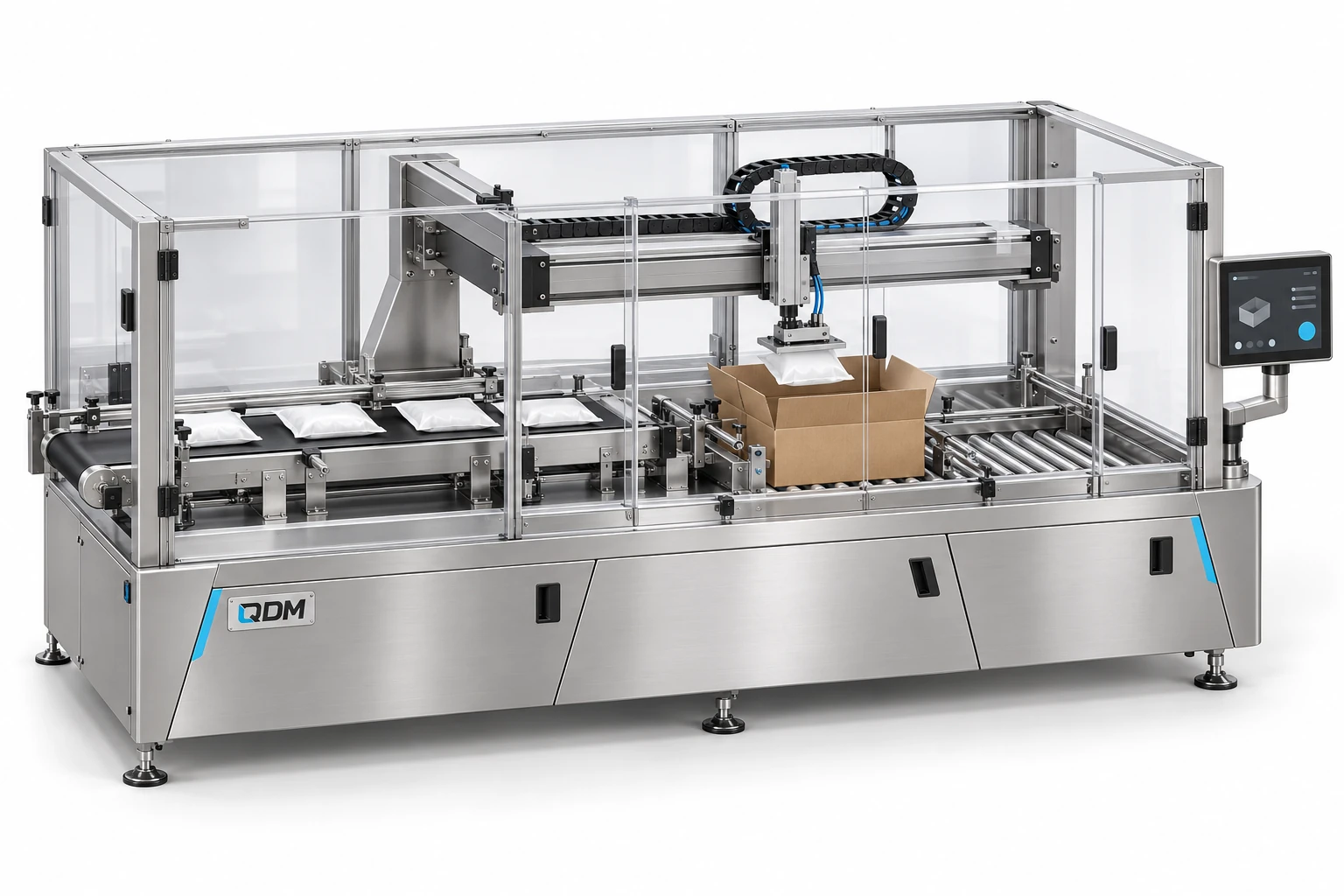
QDM’s case-packing studies combine open cartons, a conveyor and an overhead loading mechanism. The illustrated guarded concept combines a product belt, carton roller bed and an overhead Cartesian handling head. The loading principle is developed around the product and carton. The picking method, loading pattern and changeover requirements are agreed for the actual packaging task.
Define the product grouping, carton dimensions, orientation and loading sequence.
Develop a suitable gripper or loading head and its transfer motion.
Scope carton positioning, conveyor transitions, guarding, controls and changeover access.
Materials, dimensions, operating range, output, controls and delivery scope are confirmed in the project proposal.
Use these notes to define the application before choosing the final equipment configuration.
A case packing process collects products into a defined arrangement and places them in the selected carton. Carton styles such as trays, wraparound cases and tray-cover packs require different forming and closing steps. The QDM reference concept should therefore be developed from the primary pack and the required shipping or display format.
Provide both the product and carton drawings. Define count, orientation and the permitted contact surfaces for grouping and transfer. Flexible packs and rigid containers may require different guides or handling tools. Carton blanks, ready-formed cases, adhesive and mechanical closing are choices to review rather than features that can be inferred from a stainless enclosure.
The first development stage should establish the grouping sequence and pack-handling trial. Acceptance can check product orientation, carton condition, closure and response to missing items. Include the upstream feed and downstream case handling if they form part of the project. Required output follows the complete packing cycle and the agreed formats; it is not supplied as one universal QDM rating.
The table identifies the reference arrangement and the values to agree for your application.
| Parameter | Configuration / value | Confirm before manufacture |
|---|---|---|
| Primary product | Application-specific pack | Provide dimensions, mass and rigidity |
| Case style | Tray, wraparound or agreed format | Supply carton drawing and material |
| Pack pattern | Defined count and orientation | Approve the grouping arrangement |
| Case supply | Blanks or formed cases as scoped | Define magazine and loading |
| Closure | Application-specific method | Agree appearance and acceptance |
| Line interfaces | Defined infeed and case outfeed | Confirm product presentation |
| Cycle objective | Project-specific cases/min | Review grouping and closing stages |
These products are customizable. Configuration values and images are indicative and may change with the application. Final dimensions, components, controls and performance requirements are confirmed in the agreed project specification.
Representative CAD and generated design visualizations. These are not photographs of delivered equipment. Illustrated arrangements may change with customization; final values and visuals are confirmed in the project specification.
QDM supplies equipment with a standard one-year machine warranty, starting from commissioning.
Purchased components are covered under the relevant manufacturer’s warranty terms. Two-year component coverage applies where provided by the manufacturer; coverage and start dates follow those terms.
Extended warranty and maintenance agreements can be arranged for the project. Coverage, duration, service responsibilities and commercial terms are agreed in the contract.
The quotation and contract define the equipment covered, the applicable warranty terms and the agreed service arrangements.
Include product and carton drawings, pack pattern, required cycle, upstream presentation and downstream equipment.
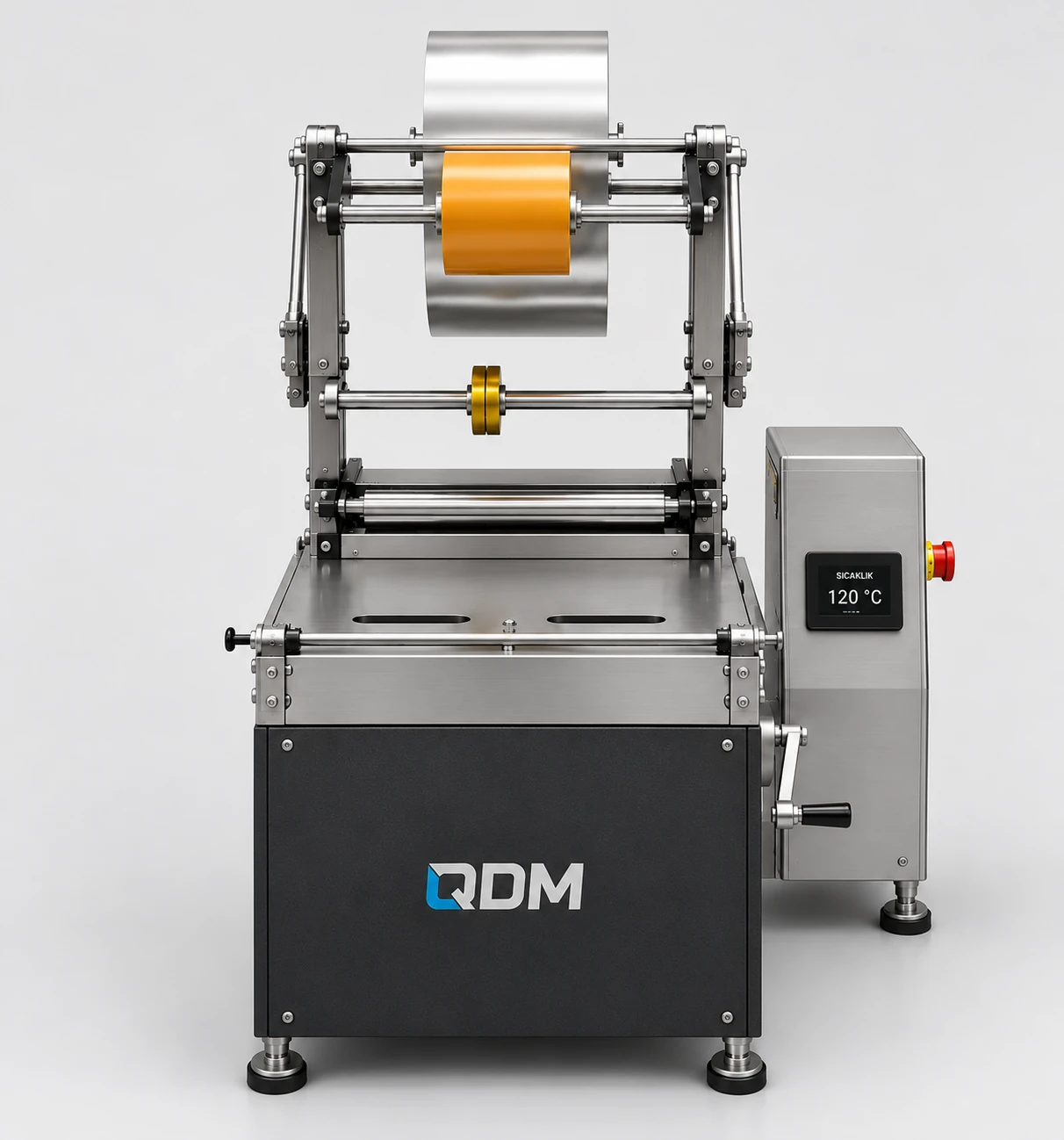
A compact semi-automatic layout for roll-fed wrapping and heat-sealing operations.
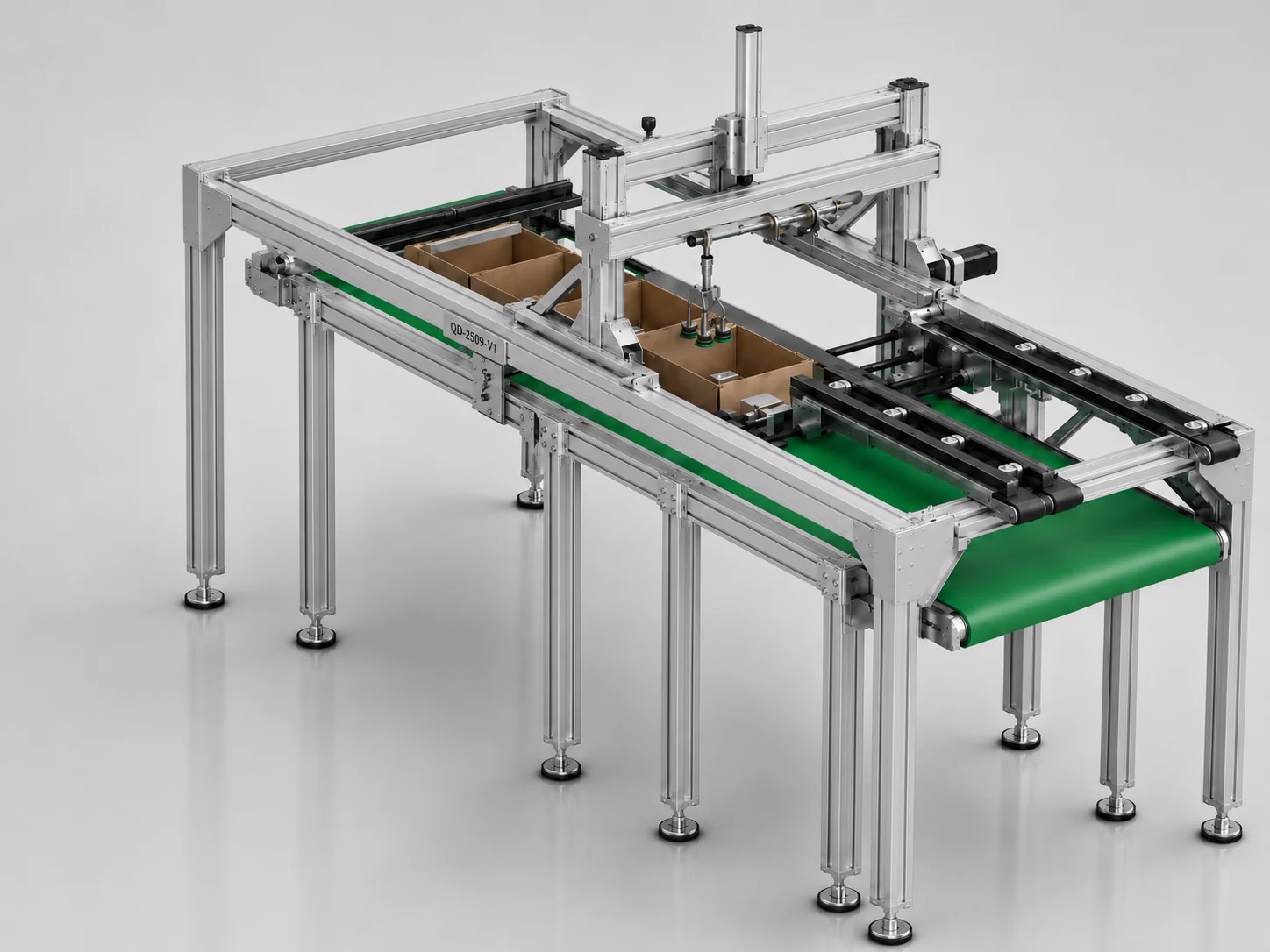
An overhead handling mechanism integrated with a belt-based workstation.
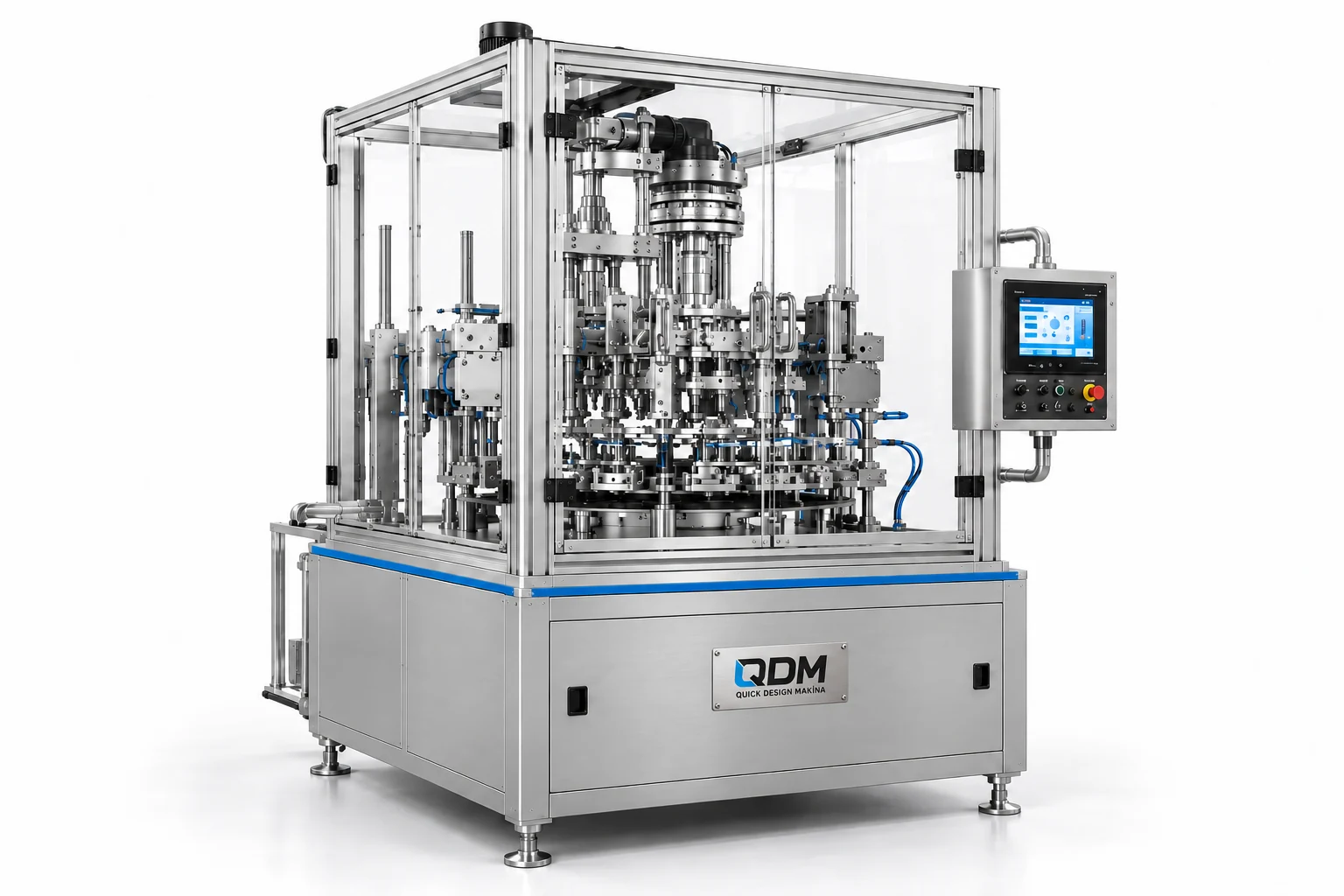
A guarded rotary machine architecture for a sequence of dedicated production operations.