
Working envelope
Define the required pick, transfer and placement positions and access clearances.
An overhead handling mechanism integrated with a belt-based workstation.
Enquire about this machineMachine & device catalog · Configuration agreed per project
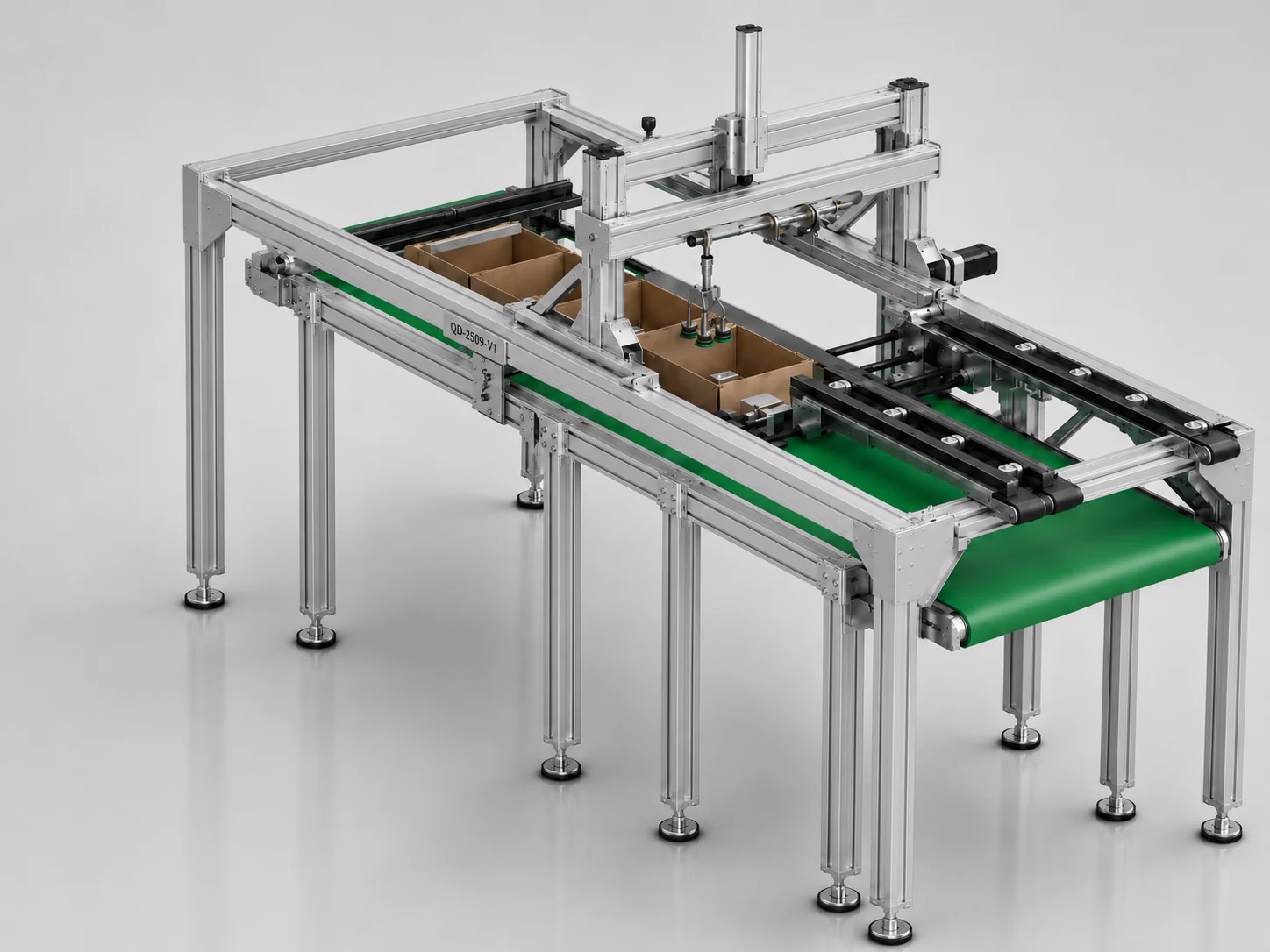
The gantry layout positions a mechanical handling structure above a product conveyor. It provides a starting point for developing pick-and-place, positioning or assembly tasks where the product needs a defined movement within a workstation. The tooling, axes and working envelope follow the operation.
Define the required pick, transfer and placement positions and access clearances.
Develop the end tool and motion arrangement around the product and handling forces.
Agree conveyor presentation, fixtures, sensors and control responsibilities.
Materials, dimensions, operating range, output, controls and delivery scope are confirmed in the project proposal.
Use these notes to define the application before choosing the final equipment configuration.
A Cartesian gantry moves along linear axes to reach points within a working envelope. QDM’s handling and assembly concept uses this arrangement as a basis for moving a tool or component between defined locations. The number of axes follows the required motion; extra movement is useful only when the application needs it.
Specify payload together with the gripper, tooling and cables. Stroke, acceleration, support spacing and the available footprint influence the mechanical layout. A gripper designed for a flat tray may not suit randomly oriented parts. Define the starting presentation and final location before discussing positioning precision or the cycle target.
For a first build, review the path, travel limits, component access and the product transfer itself. Agree the controls partner and customer interfaces, including what happens when a pick or placement cannot be completed. Verification should cover the intended payload and reach rather than an unloaded motion alone. QDM develops the mechanical arrangement and coordinates the agreed specialist integration.
The table identifies the reference arrangement and the values to agree for your application.
| Parameter | Configuration / value | Confirm before manufacture |
|---|---|---|
| Motion axes | Selected for the required path | Define X, Y, Z and any rotation |
| Working envelope | Configured strokes in mm | Provide pick and place locations |
| Moving load | Payload plus tooling in kg | Include gripper and services |
| Position target | Defined in mm | Agree measurement conditions |
| Cycle objective | Application-specific in seconds | Include gripping and process dwell |
| End effector | Part-specific gripper or tool | Review contact and orientation |
| Controls interface | QDM partner or client team as scoped | Define signals and responsibilities |
These products are customizable. Configuration values and images are indicative and may change with the application. Final dimensions, components, controls and performance requirements are confirmed in the agreed project specification.
Representative CAD and generated design visualizations. These are not photographs of delivered equipment. Illustrated arrangements may change with customization; final values and visuals are confirmed in the project specification.
QDM supplies equipment with a standard one-year machine warranty, starting from commissioning.
Purchased components are covered under the relevant manufacturer’s warranty terms. Two-year component coverage applies where provided by the manufacturer; coverage and start dates follow those terms.
Extended warranty and maintenance agreements can be arranged for the project. Coverage, duration, service responsibilities and commercial terms are agreed in the contract.
The quotation and contract define the equipment covered, the applicable warranty terms and the agreed service arrangements.
Send the product, a description or video of the task, pick and place positions and required operating cycle.
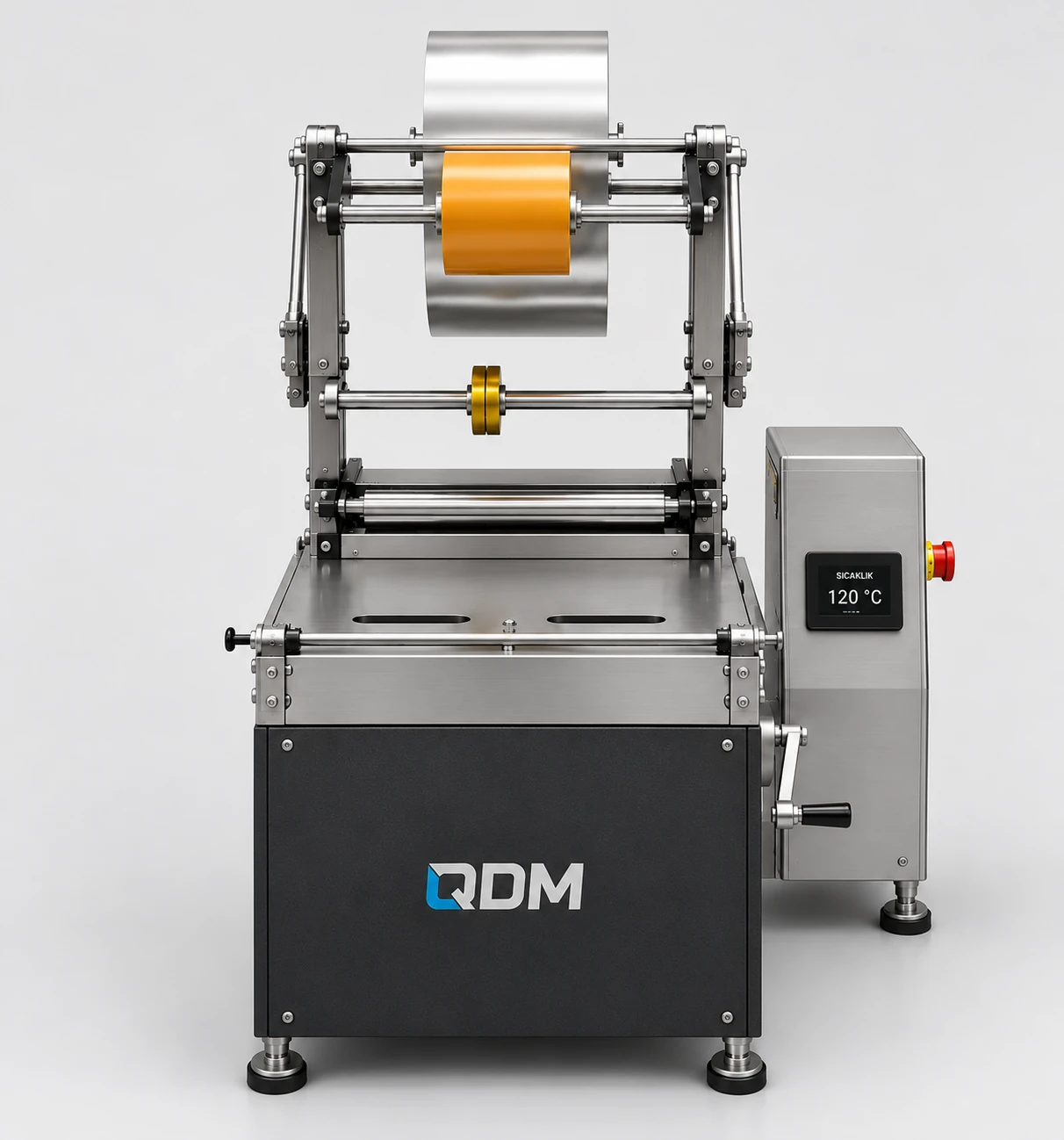
A compact semi-automatic layout for roll-fed wrapping and heat-sealing operations.
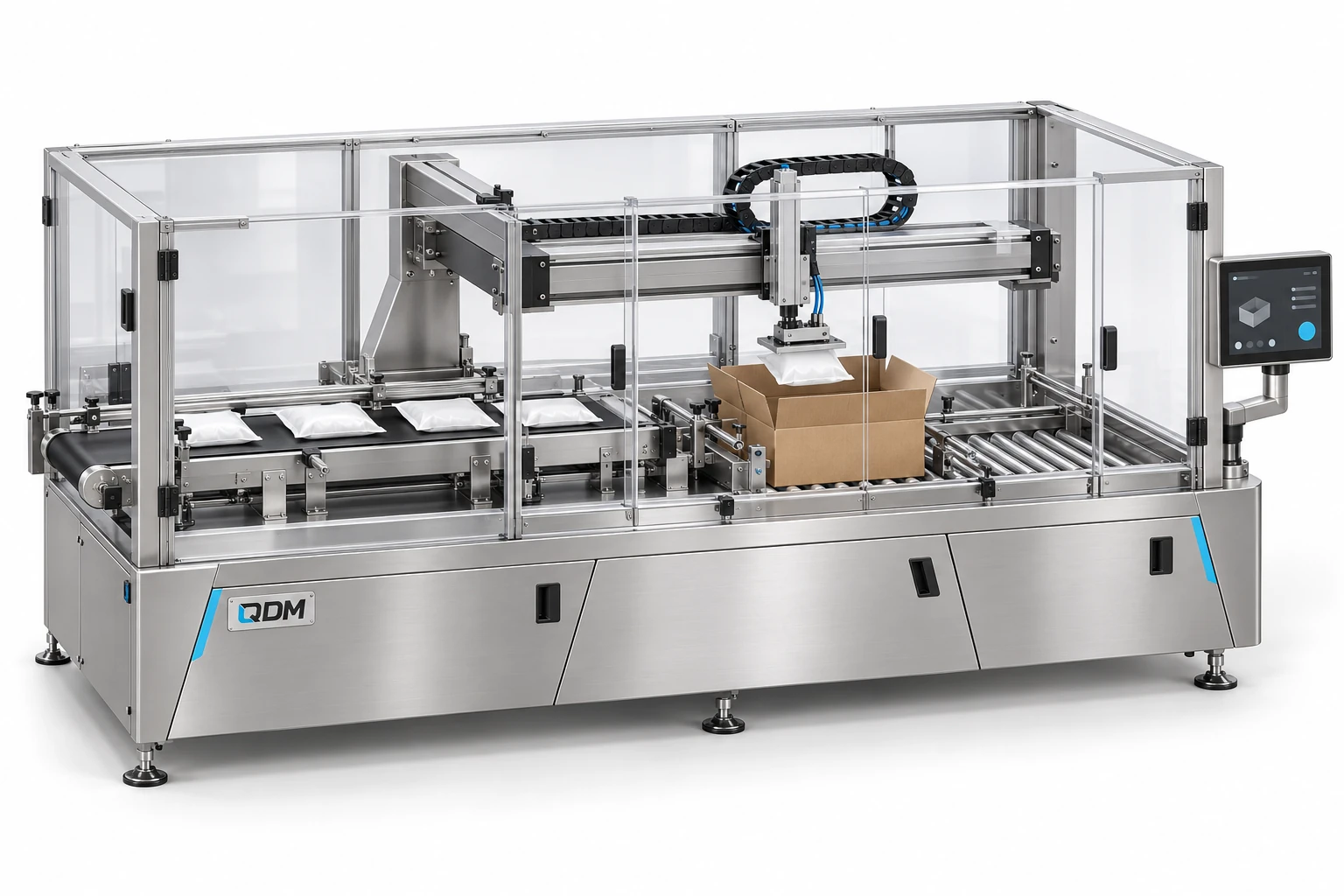
A conveyor-based case-loading layout with overhead product handling.
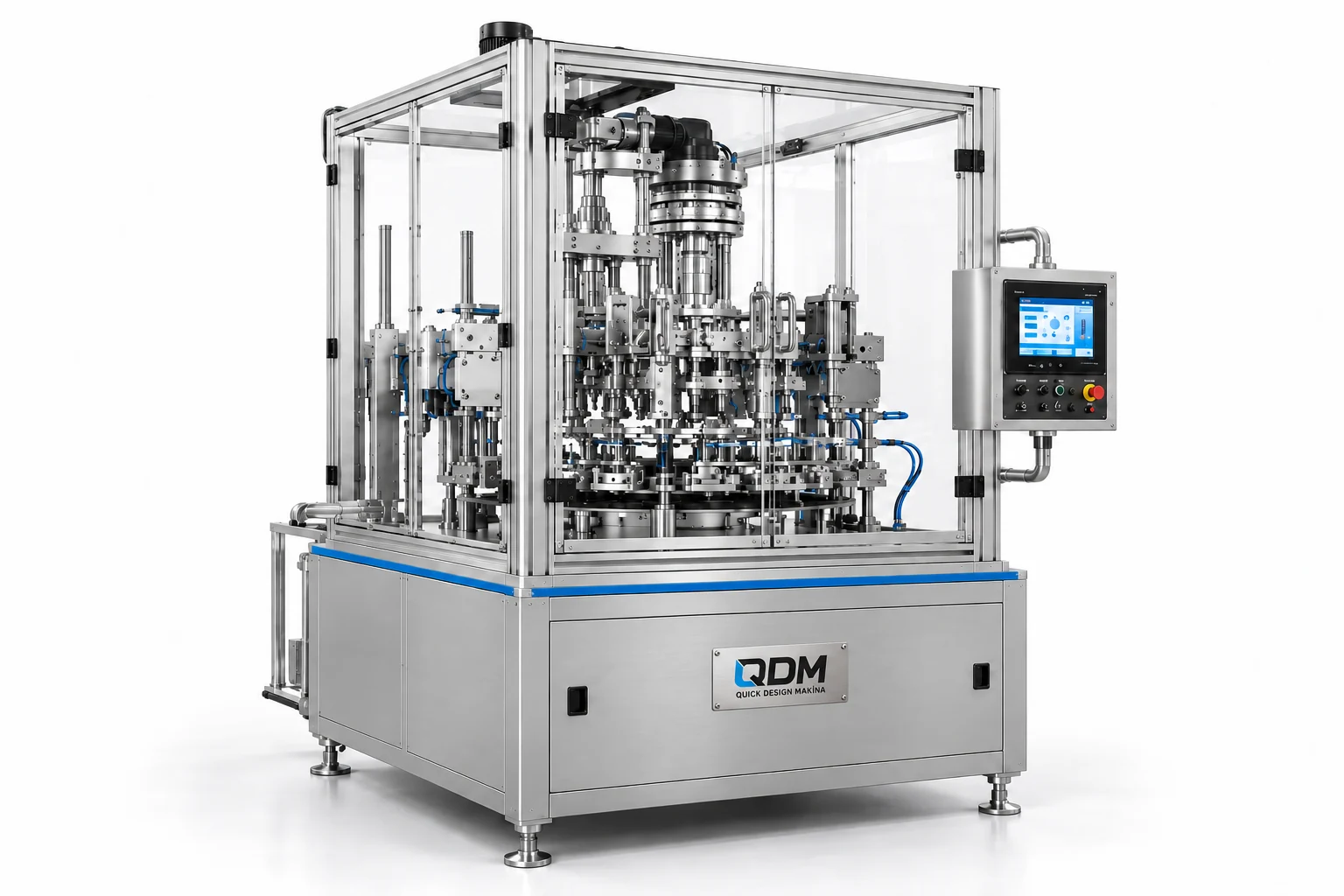
A guarded rotary machine architecture for a sequence of dedicated production operations.