
Product and film
Agree pack dimensions, film type, wrapping sequence and required finished appearance.
A compact semi-automatic layout for roll-fed wrapping and heat-sealing operations.
Enquire about this machineMachine & device catalog · Configuration agreed per project
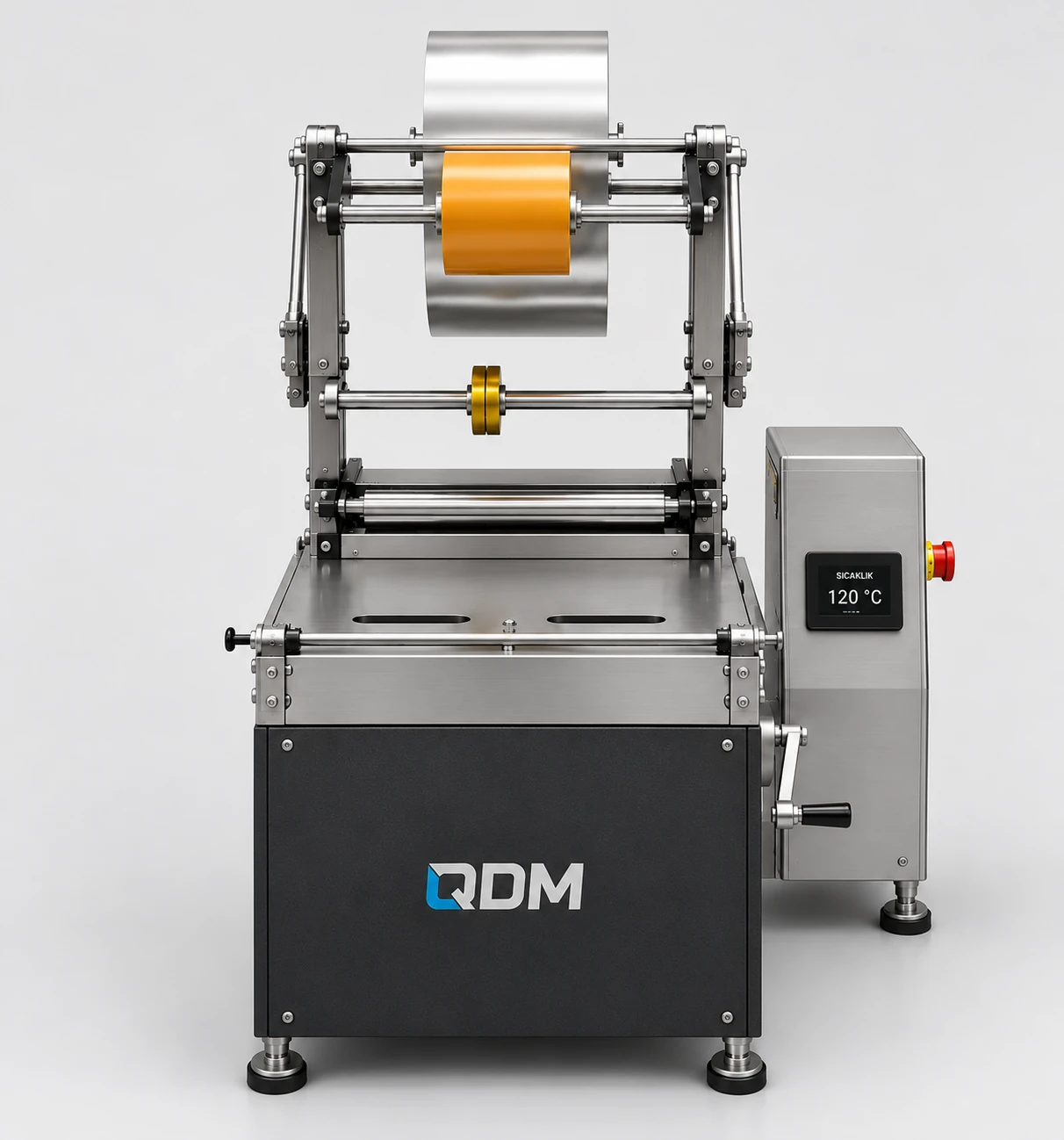
This wrapping concept places a film roll, guided feed and sealing area within a compact machine frame. The operator’s handling sequence and product format determine the layout. Film compatibility, sealing method, temperature control and machine guarding are defined for the selected material and process.
Agree pack dimensions, film type, wrapping sequence and required finished appearance.
Develop the roll support, film path, work area and application-specific sealing arrangement.
Define controls, access, ergonomics and the safety measures required for the machine.
Materials, dimensions, operating range, output, controls and delivery scope are confirmed in the project proposal.
Use these notes to define the application before choosing the final equipment configuration.
A film wrapping machine feeds material around a product and forms an agreed seal. Overwrapping commonly folds a sheet around a pack, while other film processes may use a different path or sealing arrangement. QDM’s concept is a starting point for discussing the actual pack and film, not a claim that one machine handles every wrapping method.
Supply the pack dimensions, surface, rigidity and the selected film. Fold geometry, film feed and heat-sealing conditions should be reviewed together. A film described informally as cellophane may have a different composition or sealing behaviour; its supplier information is therefore useful. Define whether the wrapped product is a single item or a group.
Development should check representative packs and film through feeding, folding and sealing. Agree the required appearance, seal acceptance and changeover procedure for each format. If the unit connects to a line, include product presentation and rejected-pack handling in the brief. Final output is established from the complete operating cycle and the specified materials, not from an illustrative render.
The table identifies the reference arrangement and the values to agree for your application.
| Parameter | Configuration / value | Confirm before manufacture |
|---|---|---|
| Pack size | Defined in mm | Provide all intended formats |
| Film type | Client-selected or reviewed material | Confirm supplier and sealing data |
| Wrapping method | Defined during feasibility | Agree folds and seal position |
| Film feed | Configured for the pack | Review roll and tension arrangement |
| Sealing conditions | Set for the film and process | Agree verification procedure |
| Loading | Manual or line-fed as scoped | Define product orientation |
| Output objective | Project-specific packs/min | Confirm with materials and cycle |
These products are customizable. Configuration values and images are indicative and may change with the application. Final dimensions, components, controls and performance requirements are confirmed in the agreed project specification.
Representative CAD and generated design visualizations. These are not photographs of delivered equipment. Illustrated arrangements may change with customization; final values and visuals are confirmed in the project specification.
QDM supplies equipment with a standard one-year machine warranty, starting from commissioning.
Purchased components are covered under the relevant manufacturer’s warranty terms. Two-year component coverage applies where provided by the manufacturer; coverage and start dates follow those terms.
Extended warranty and maintenance agreements can be arranged for the project. Coverage, duration, service responsibilities and commercial terms are agreed in the contract.
The quotation and contract define the equipment covered, the applicable warranty terms and the agreed service arrangements.
Send product and pack dimensions, film information, desired seal layout, samples or a process video and expected operating cycle.
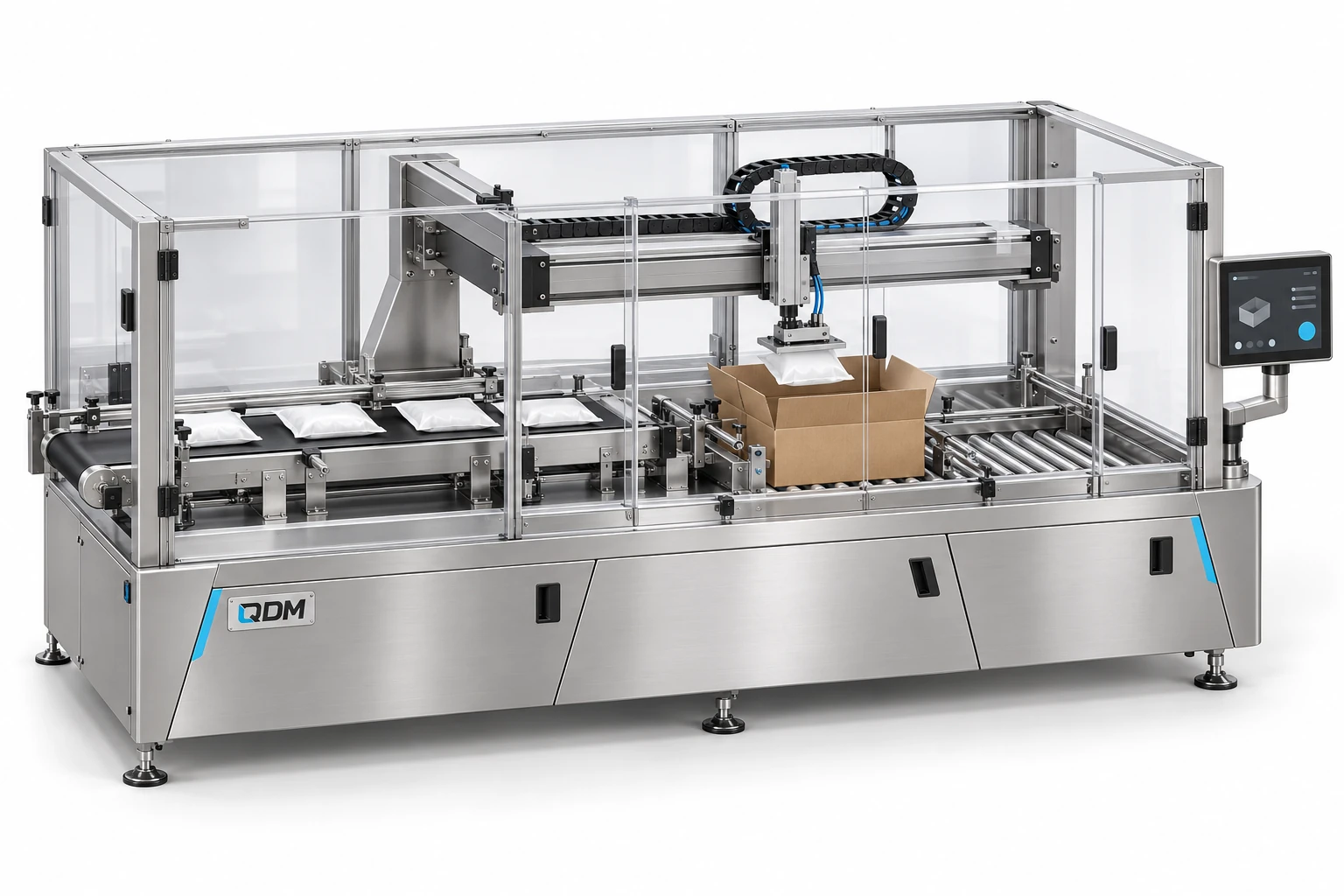
A conveyor-based case-loading layout with overhead product handling.
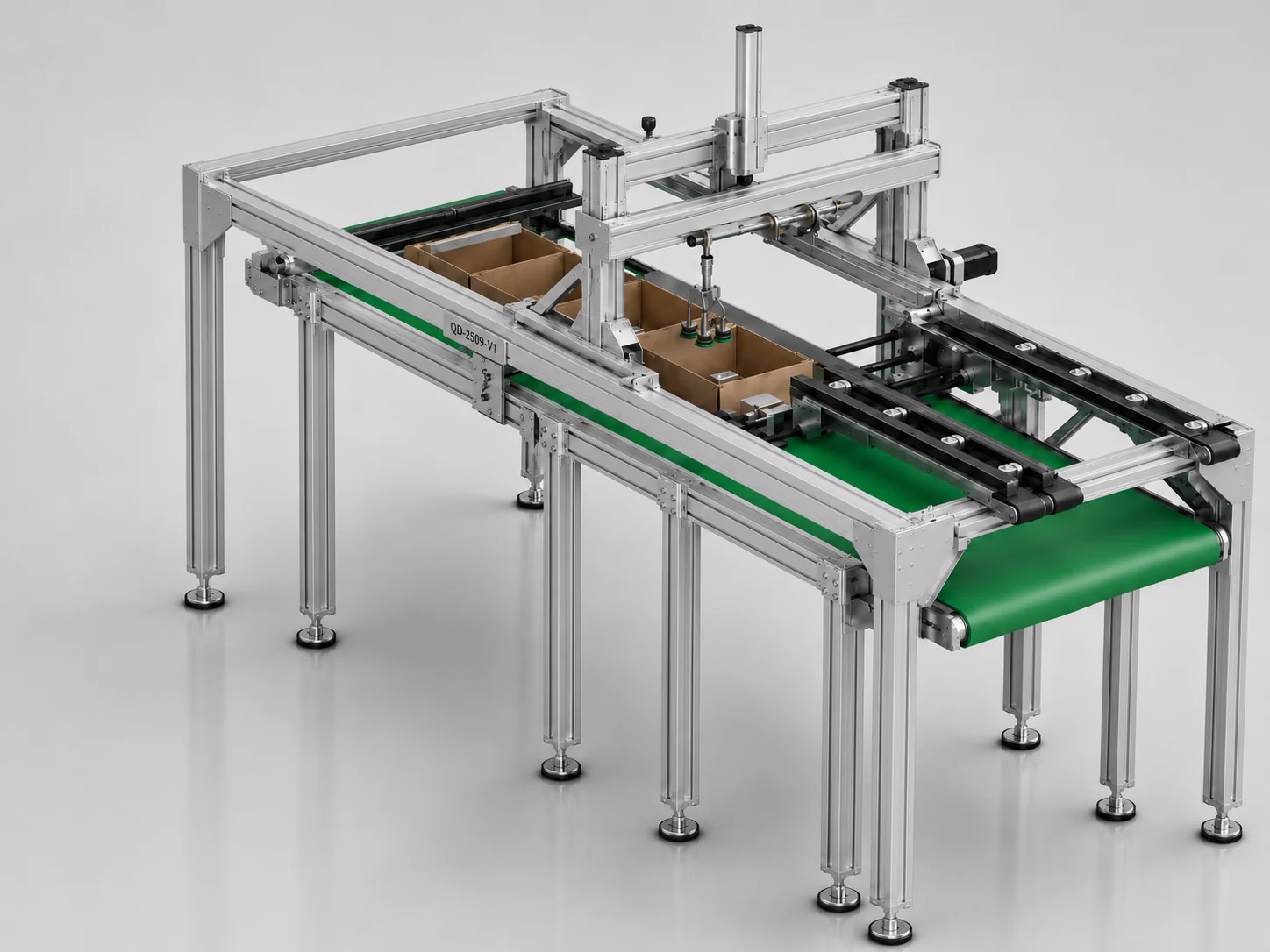
An overhead handling mechanism integrated with a belt-based workstation.
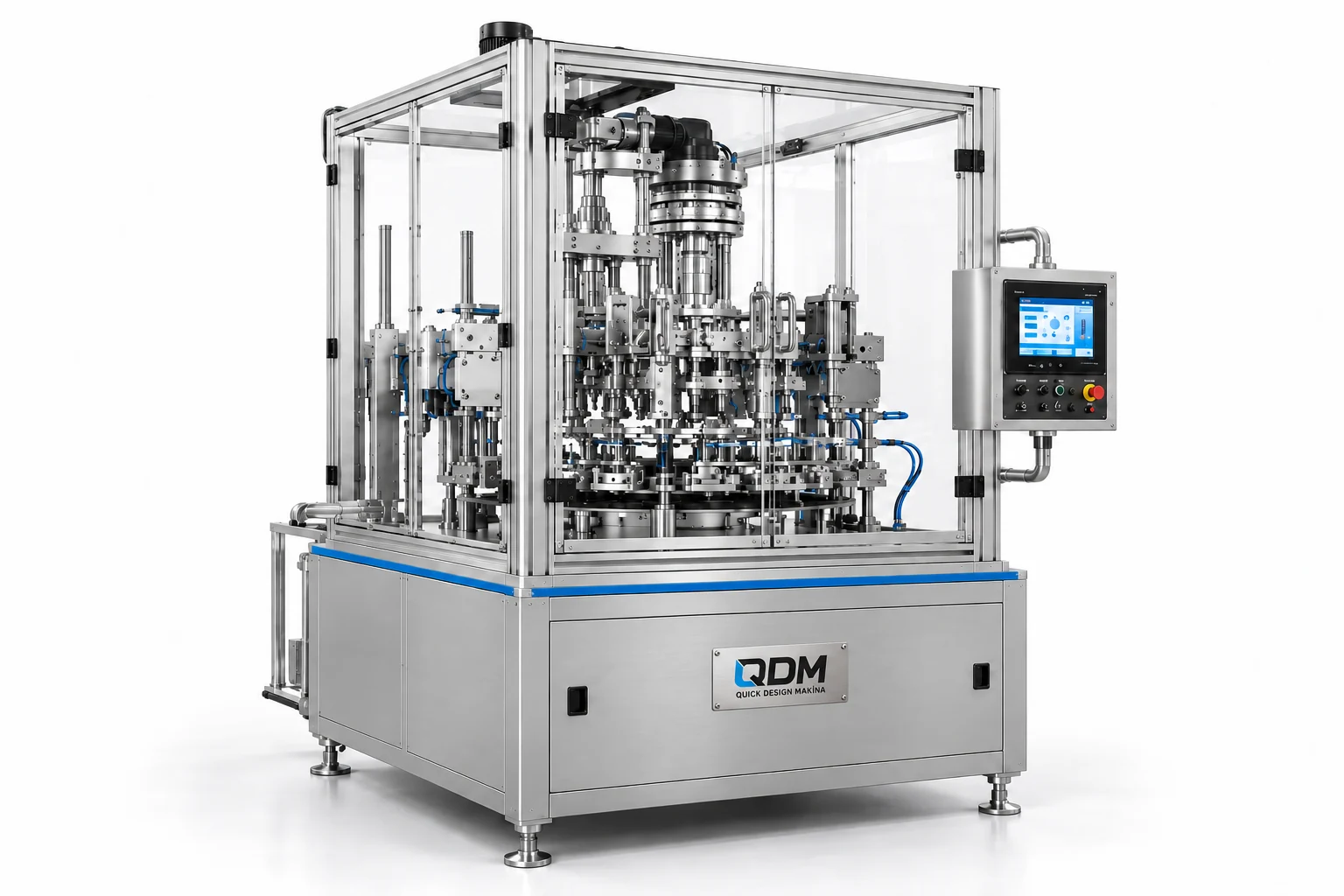
A guarded rotary machine architecture for a sequence of dedicated production operations.