
Operation sequence
Break the task into loading, processing, inspection and unloading stages.
A guarded rotary machine architecture for a sequence of dedicated production operations.
Enquire about this machineMachine & device catalog · Configuration agreed per project
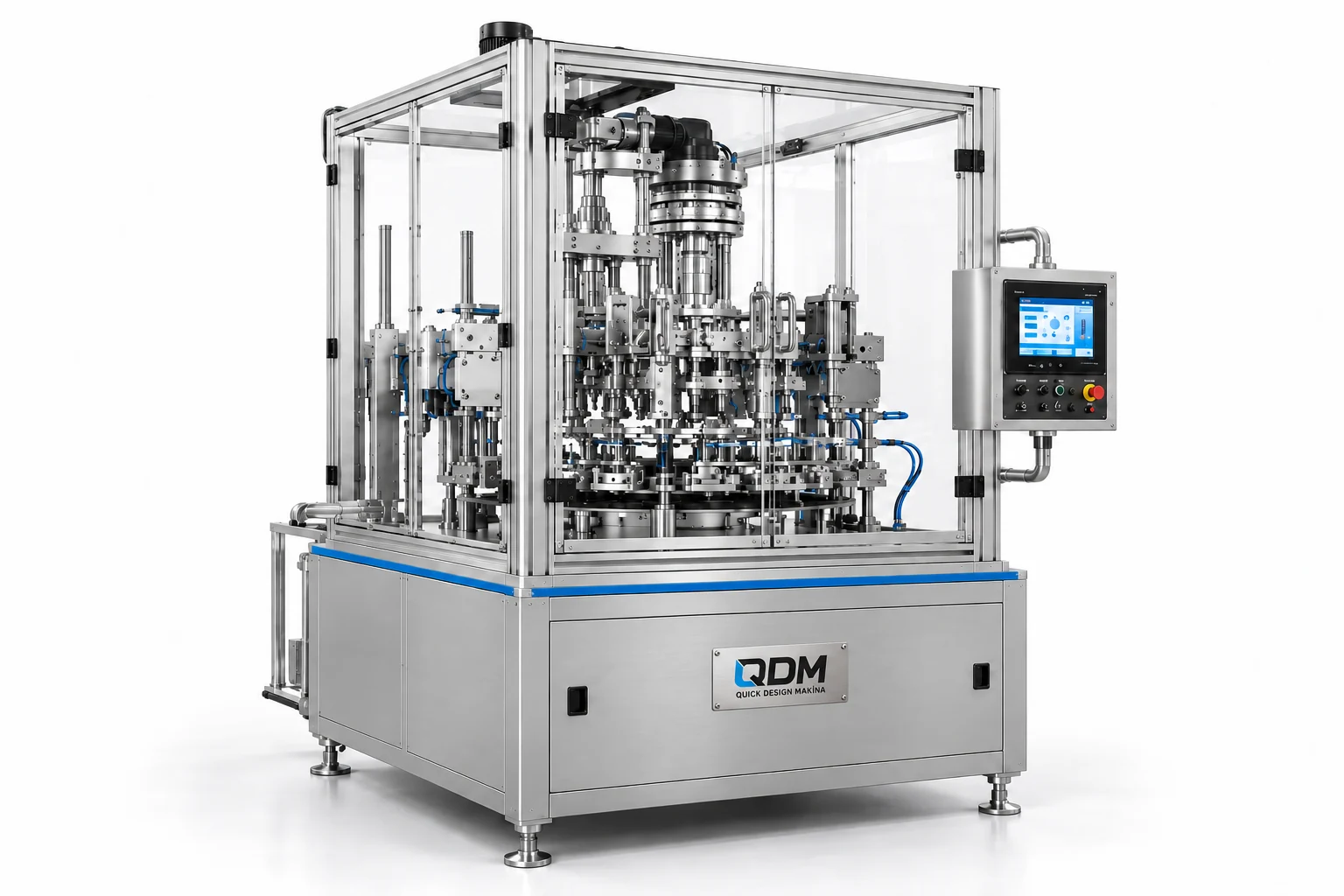
This concept groups several mechanical operations around a rotary work area inside a guarded frame. The rotating carrier brings parts to successive tooling positions, while the cabinet and external operator panel support the overall machine arrangement. The exact task, tooling and indexing method are developed around the product.
Break the task into loading, processing, inspection and unloading stages.
Develop nests, actuated mechanisms and the rotary carrier around the parts.
Scope guarding, operator access, controls and connections to adjacent equipment.
Materials, dimensions, operating range, output, controls and delivery scope are confirmed in the project proposal.
Use these notes to define the application before choosing the final equipment configuration.
A rotary special-purpose machine moves a product fixture between working stations around an indexing table. Each location can serve an agreed assembly, processing or checking operation. QDM’s guarded reference design illustrates this mechanical arrangement; the actual tools and station sequence are developed from the product and task.
Map each operation before selecting station count. Indexing movement and the time spent working at a station are different parts of the cycle. Fixtures need to locate the part consistently while leaving room for tools and unloading. Changes in product shape can require new nests, not simply a different control setting.
The development plan should review product loading, tooling access, indexing clearance and removal of a failed part. Agree how station results affect the next operation and what information is retained. A trial with representative parts can establish the fixture and process checks. QDM can coordinate the mechanical machine, specialist controls and final acceptance as defined in the project proposal.
The table identifies the reference arrangement and the values to agree for your application.
| Parameter | Configuration / value | Confirm before manufacture |
|---|---|---|
| Station count | Defined from the process sequence | Map loading, work and unloading |
| Table and fixture envelope | Configured in mm | Confirm product and tool clearance |
| Indexing arrangement | Selected for motion and load | Agree stops and working positions |
| Cycle objective | Defined index and dwell times | Identify the longest operation |
| Tooling | Product-specific nests and mechanisms | Provide part drawings or samples |
| Quality checks | Included where scoped | Define pass/fail and removal method |
| Access and controls | Project-specific | Agree guarding and integration |
These products are customizable. Configuration values and images are indicative and may change with the application. Final dimensions, components, controls and performance requirements are confirmed in the agreed project specification.
Representative CAD and generated design visualizations. These are not photographs of delivered equipment. Illustrated arrangements may change with customization; final values and visuals are confirmed in the project specification.
QDM supplies equipment with a standard one-year machine warranty, starting from commissioning.
Purchased components are covered under the relevant manufacturer’s warranty terms. Two-year component coverage applies where provided by the manufacturer; coverage and start dates follow those terms.
Extended warranty and maintenance agreements can be arranged for the project. Coverage, duration, service responsibilities and commercial terms are agreed in the contract.
The quotation and contract define the equipment covered, the applicable warranty terms and the agreed service arrangements.
Include the part, required operations, tolerances, loading method, target cycle and any existing tooling.
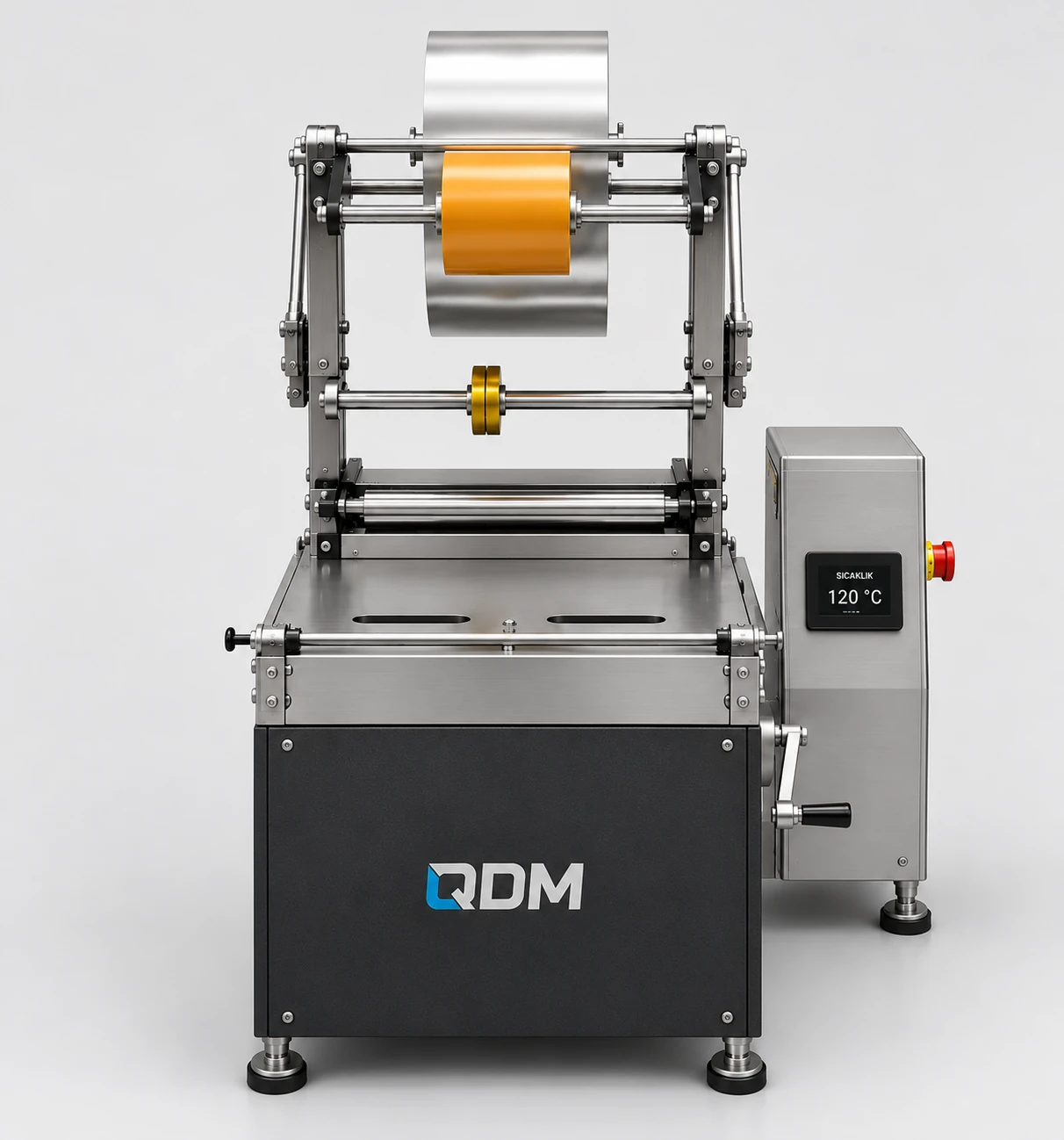
A compact semi-automatic layout for roll-fed wrapping and heat-sealing operations.
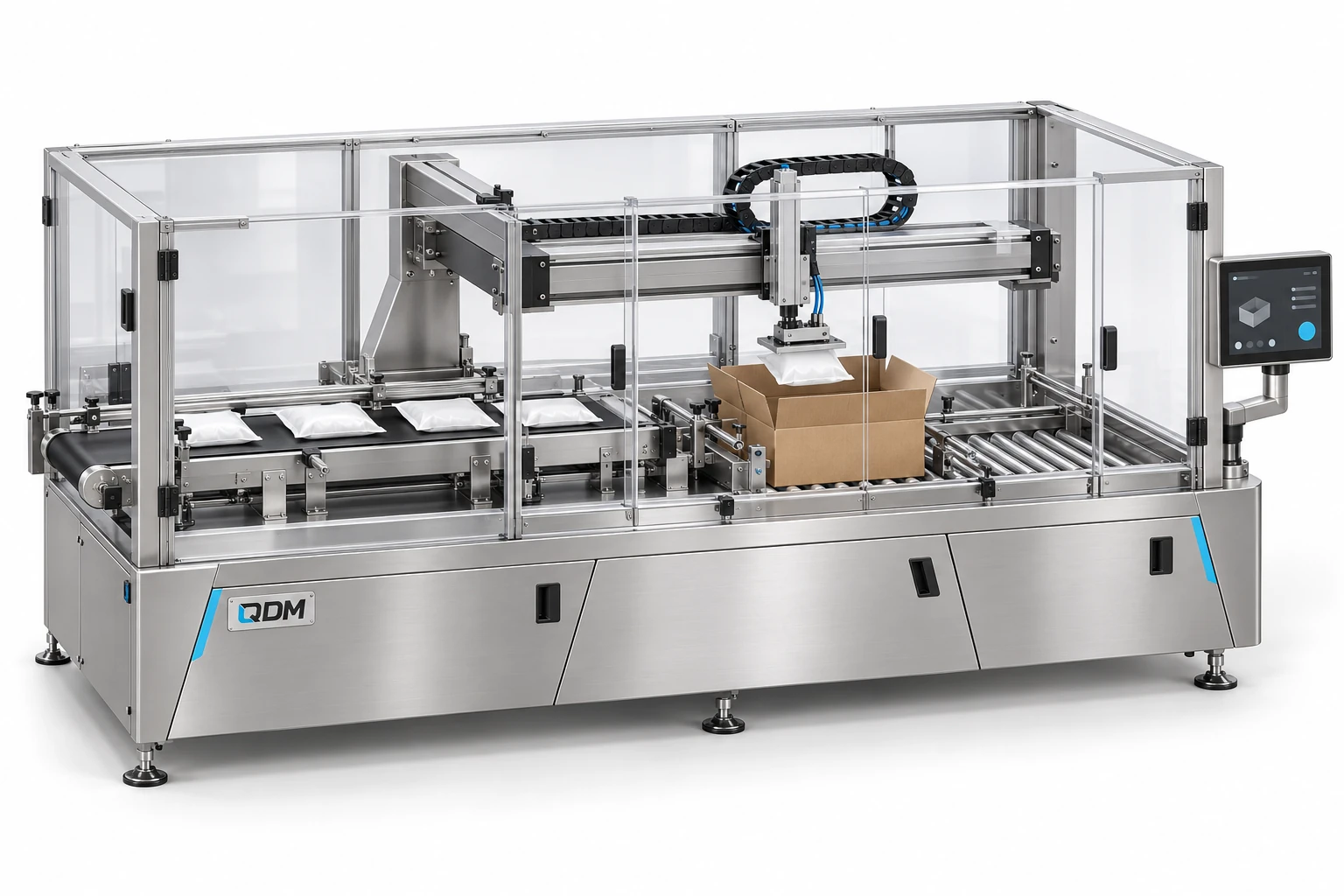
A conveyor-based case-loading layout with overhead product handling.
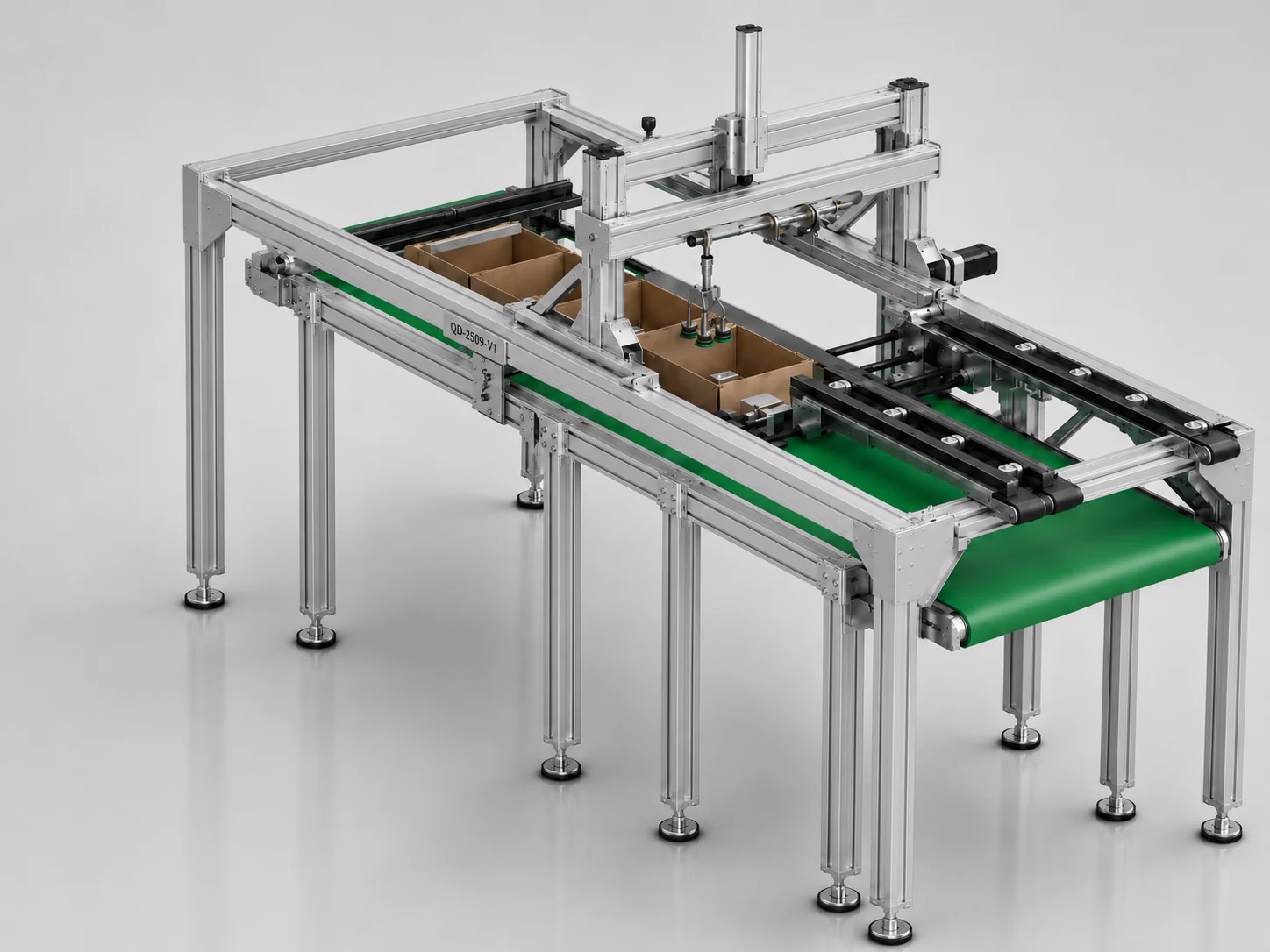
An overhead handling mechanism integrated with a belt-based workstation.