
Product presentation
Define feed orientation, locating features and the transfer to the working position.
A compact conveyor-fed rotary workstation with dedicated tooling and an operator panel.
Enquire about this machineMachine & device catalog · Configuration agreed per project
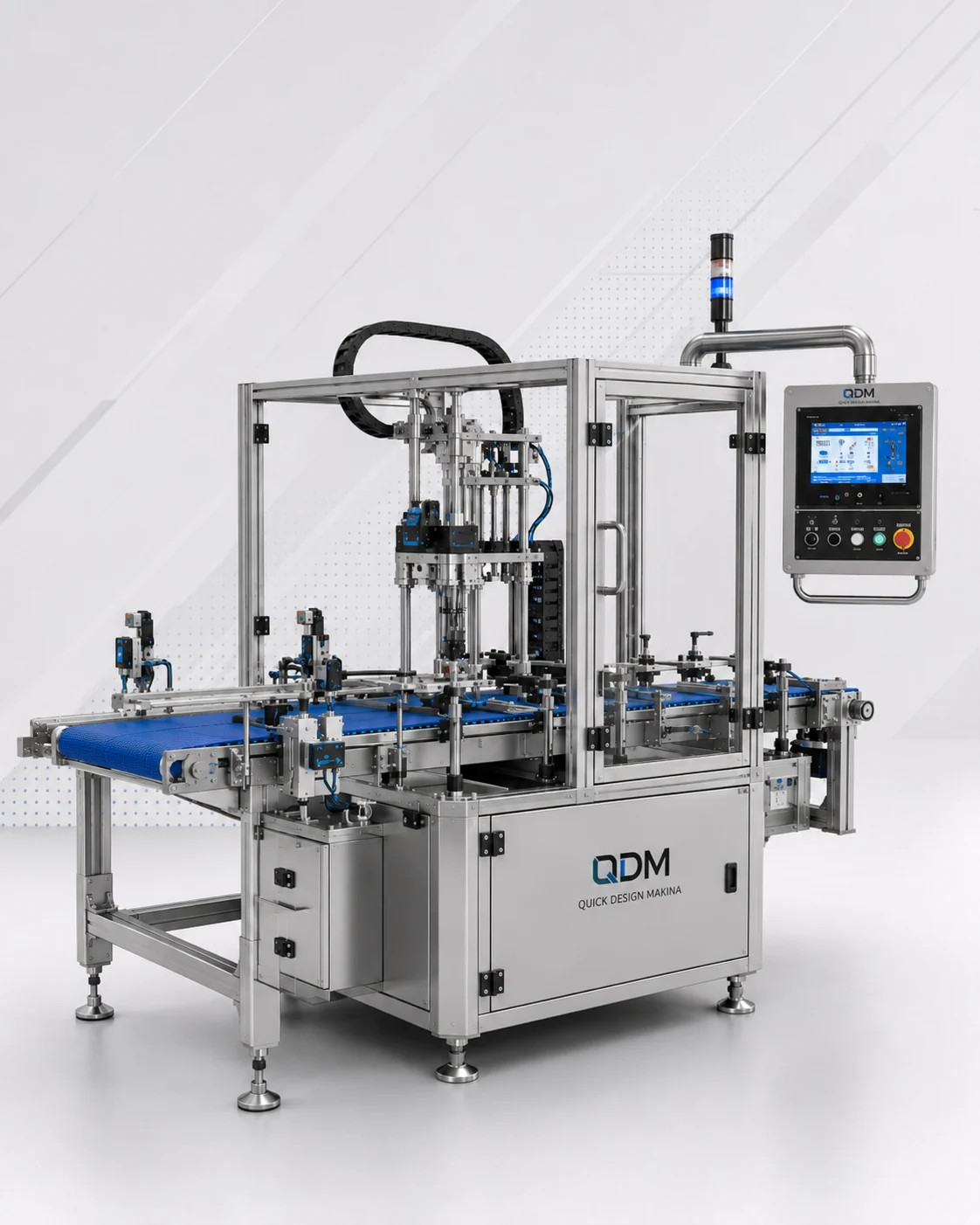
The open-frame rotary workstation study connects a short blue conveyor to a compact mechanical cell. It is intended as a layout discussion for feeding, locating and processing small products within one station. The actual operation and the necessary protective measures determine the finished enclosure and workstation layout.
Define feed orientation, locating features and the transfer to the working position.
Develop the tooling, actuators and rotary movement for the required task.
Agree guarding, operator interaction, control interfaces and the outfeed arrangement.
Materials, dimensions, operating range, output, controls and delivery scope are confirmed in the project proposal.
Use these notes to define the application before choosing the final equipment configuration.
A compact rotary assembly cell places a small set of operations around a rotating fixture area. QDM’s concept combines a dedicated mechanism with product-transfer interfaces. It is useful when a repeatable task can be organised in a limited footprint, but the reference enclosure alone does not establish a station sequence or production capacity.
Begin with the part orientation and how it reaches the first fixture. Tool approach, fastening or pressing direction and the space needed to release the part determine the local mechanism. A compact layout should also allow practical adjustment and service access. State which operations are manual and which should be automated.
Review a complete assembly sequence using representative parts before committing to final tooling. Acceptance should include locating, operation completion and outfeed, with a defined response to missing or incorrectly presented parts. If a conveyor is required, agree its boundaries and signals. The quoted configuration should identify the mechanical scope, controls responsibilities and checks for the intended assembly.
The table identifies the reference arrangement and the values to agree for your application.
| Parameter | Configuration / value | Confirm before manufacture |
|---|---|---|
| Assembly task | One agreed process sequence | Provide part and operation details |
| Part envelope | Defined in mm | Review locating and tool access |
| Working stations | Configured around the task | Identify manual and automatic steps |
| Rotary fixture | Part-specific layout | Agree adjustment and release |
| Tool requirement | Application-specific force or motion | Define process objective |
| Feed and discharge | Scoped transfer arrangement | Confirm orientation and interfaces |
| Acceptance | Defined assembly and handling checks | Agree representative test parts |
These products are customizable. Configuration values and images are indicative and may change with the application. Final dimensions, components, controls and performance requirements are confirmed in the agreed project specification.
Representative CAD and generated design visualizations. These are not photographs of delivered equipment. Illustrated arrangements may change with customization; final values and visuals are confirmed in the project specification.
QDM supplies equipment with a standard one-year machine warranty, starting from commissioning.
Purchased components are covered under the relevant manufacturer’s warranty terms. Two-year component coverage applies where provided by the manufacturer; coverage and start dates follow those terms.
Extended warranty and maintenance agreements can be arranged for the project. Coverage, duration, service responsibilities and commercial terms are agreed in the contract.
The quotation and contract define the equipment covered, the applicable warranty terms and the agreed service arrangements.
Share the part, operation, infeed and outfeed requirements, cycle objective and a sketch of the surrounding layout.
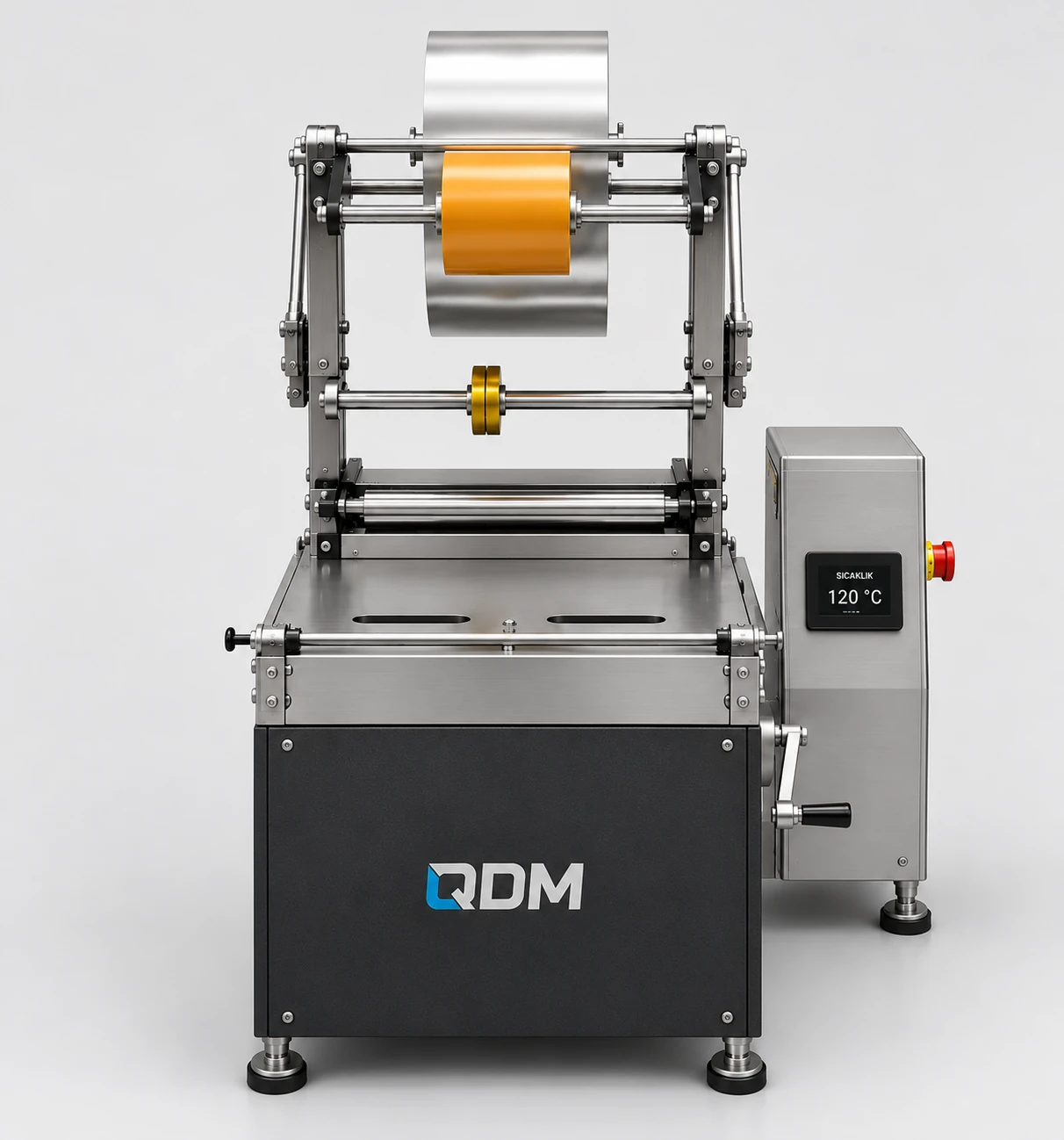
A compact semi-automatic layout for roll-fed wrapping and heat-sealing operations.
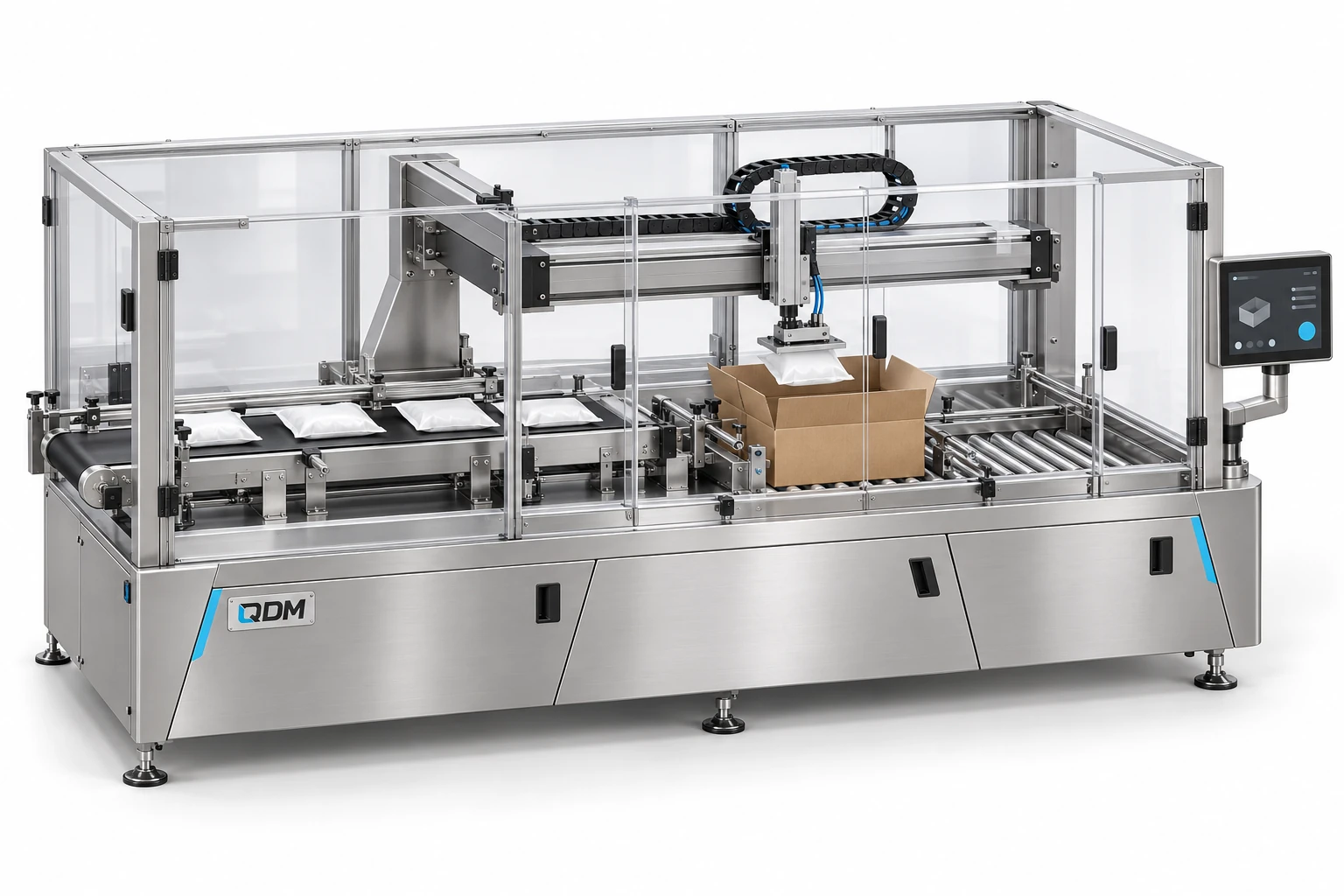
A conveyor-based case-loading layout with overhead product handling.
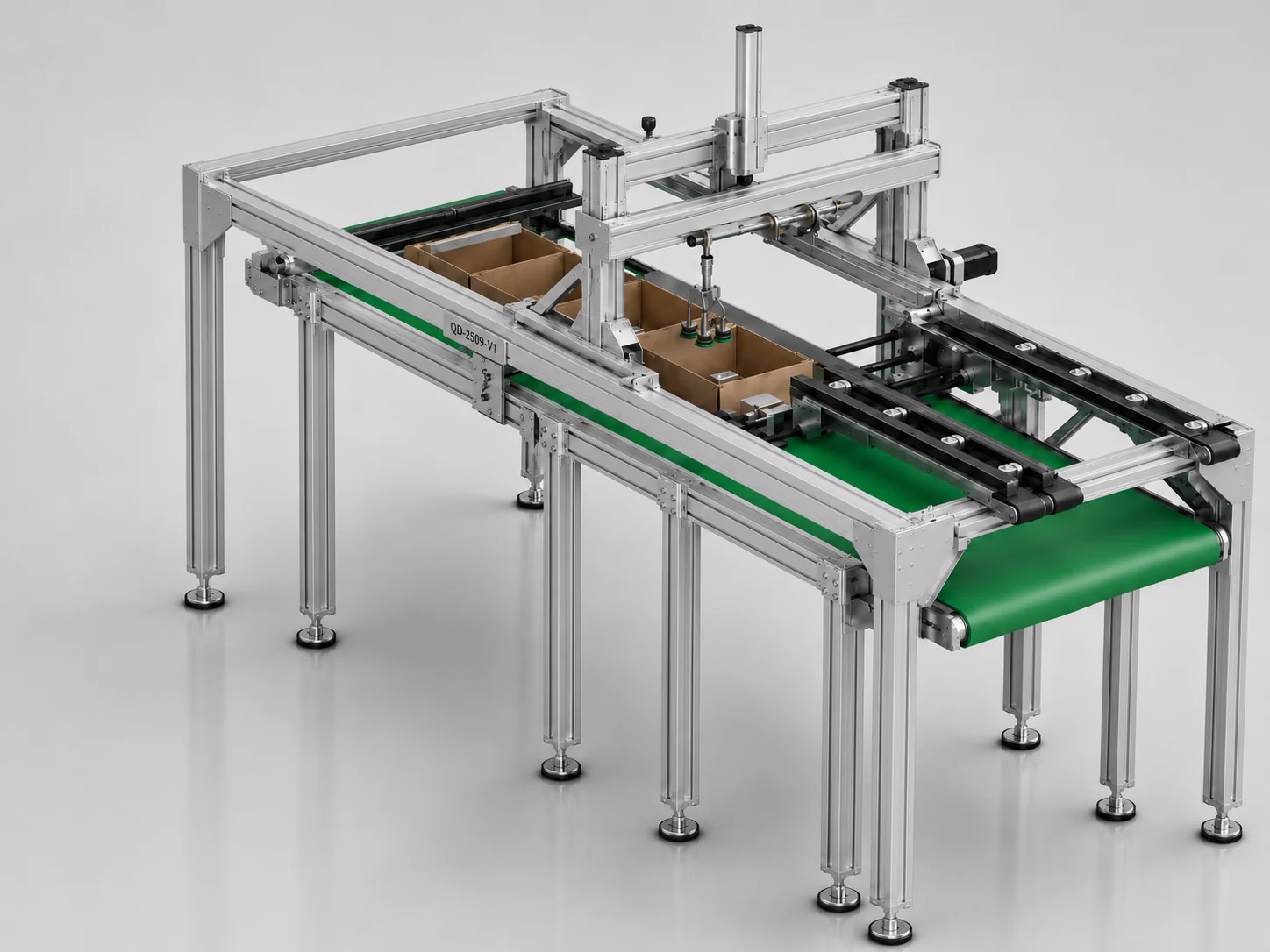
An overhead handling mechanism integrated with a belt-based workstation.