
Container and label
Define container geometry, label dimensions, roll format and placement reference.
A conveyor-based label-application concept for bottle and container packaging.
Enquire about this machineMachine & device catalog · Configuration agreed per project
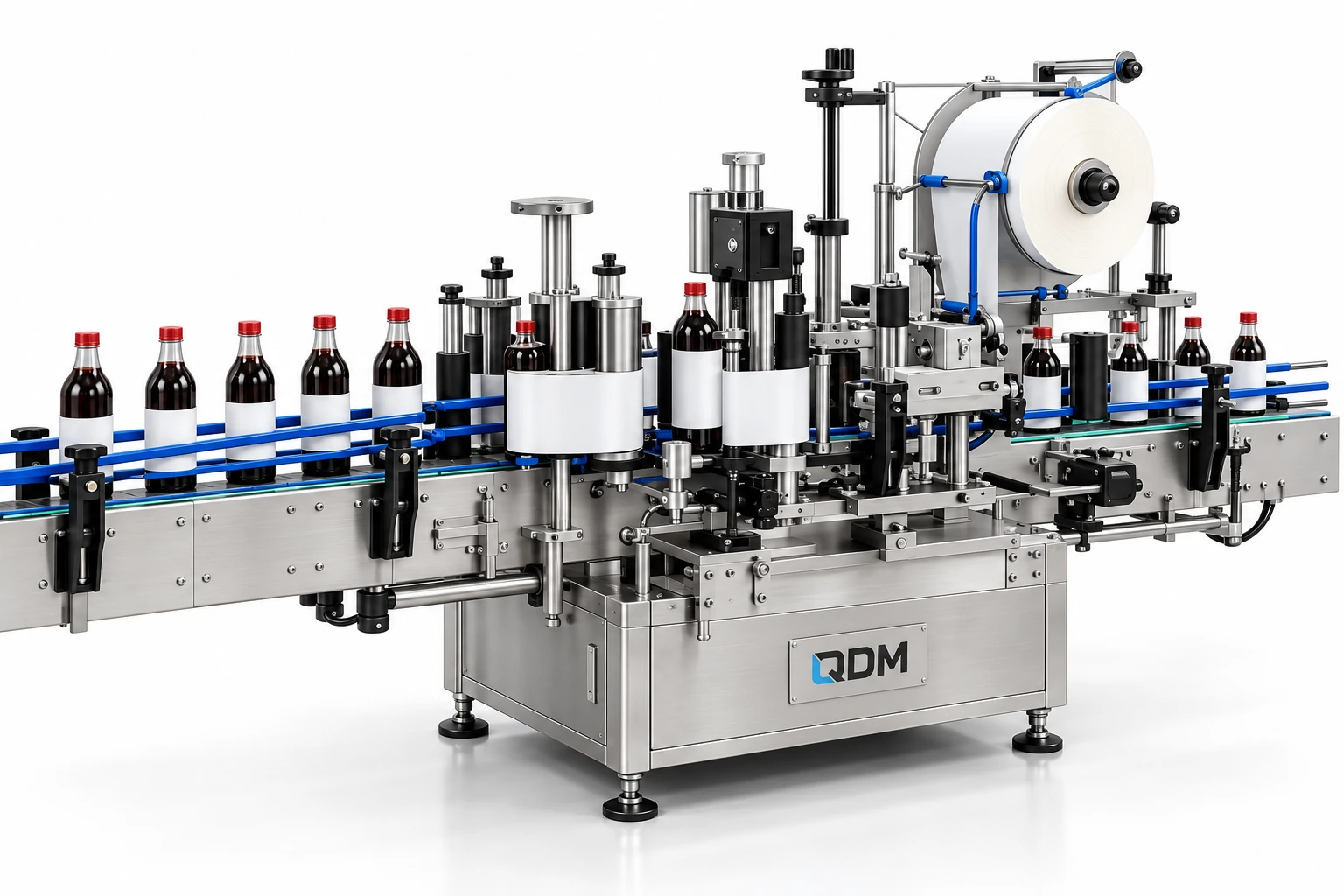
This labelling layout combines bottle transport with a roll-fed label mechanism and product-guiding elements. The machine is developed around the container surface, label format and presentation method. Label placement, indexing and integration with upstream filling and downstream packaging are agreed for the line.
Define container geometry, label dimensions, roll format and placement reference.
Develop guides, label feed and the mechanism needed for consistent presentation.
Scope controls, sensing, changeover and machine transitions.
Materials, dimensions, operating range, output, controls and delivery scope are confirmed in the project proposal.
Use these notes to define the application before choosing the final equipment configuration.
A bottle labelling machine positions a container and applies an agreed label format. Pressure-sensitive labels, glued labels and sleeves are different technologies with different material handling. QDM’s reference layout provides a basis for discussing the chosen bottle and label, rather than claiming that all label types are supported by the same configuration.
Supply the container geometry and the label material or roll specification. A cylindrical bottle and a shaped container need different locating decisions. The desired seam or orientation can affect how a container is presented and turned. Label roll width, liner behaviour and the artwork registration requirements should be reviewed alongside the mechanical feed.
Development trials should compare position, appearance and adhesion on representative containers. Agree the inspection criterion, missing-label response and format-change procedure. Printing or coding can be included as a separate module where requested. The final machine scope should define the application method, operating cycle and line interfaces, with output and positioning targets checked for the specified formats.
The table identifies the reference arrangement and the values to agree for your application.
| Parameter | Configuration / value | Confirm before manufacture |
|---|---|---|
| Container geometry | Defined shape and dimensions | Provide samples and locating features |
| Label technology | Selected application method | Confirm material and adhesive |
| Label size | Defined in mm | Supply artwork and application area |
| Roll specification | Core, direction and liner as applicable | Confirm supplier details |
| Position target | Agreed in mm or visual reference | Define inspection and orientation |
| Product feed | Manual or line-fed as scoped | Review spacing and stability |
| Additional modules | Coding or inspection where quoted | Define signals and acceptance |
These products are customizable. Configuration values and images are indicative and may change with the application. Final dimensions, components, controls and performance requirements are confirmed in the agreed project specification.
Representative CAD and generated design visualizations. These are not photographs of delivered equipment. Illustrated arrangements may change with customization; final values and visuals are confirmed in the project specification.
QDM supplies equipment with a standard one-year machine warranty, starting from commissioning.
Purchased components are covered under the relevant manufacturer’s warranty terms. Two-year component coverage applies where provided by the manufacturer; coverage and start dates follow those terms.
Extended warranty and maintenance agreements can be arranged for the project. Coverage, duration, service responsibilities and commercial terms are agreed in the contract.
The quotation and contract define the equipment covered, the applicable warranty terms and the agreed service arrangements.
Send bottle and label samples, placement requirements, roll information, cycle target and line layout.
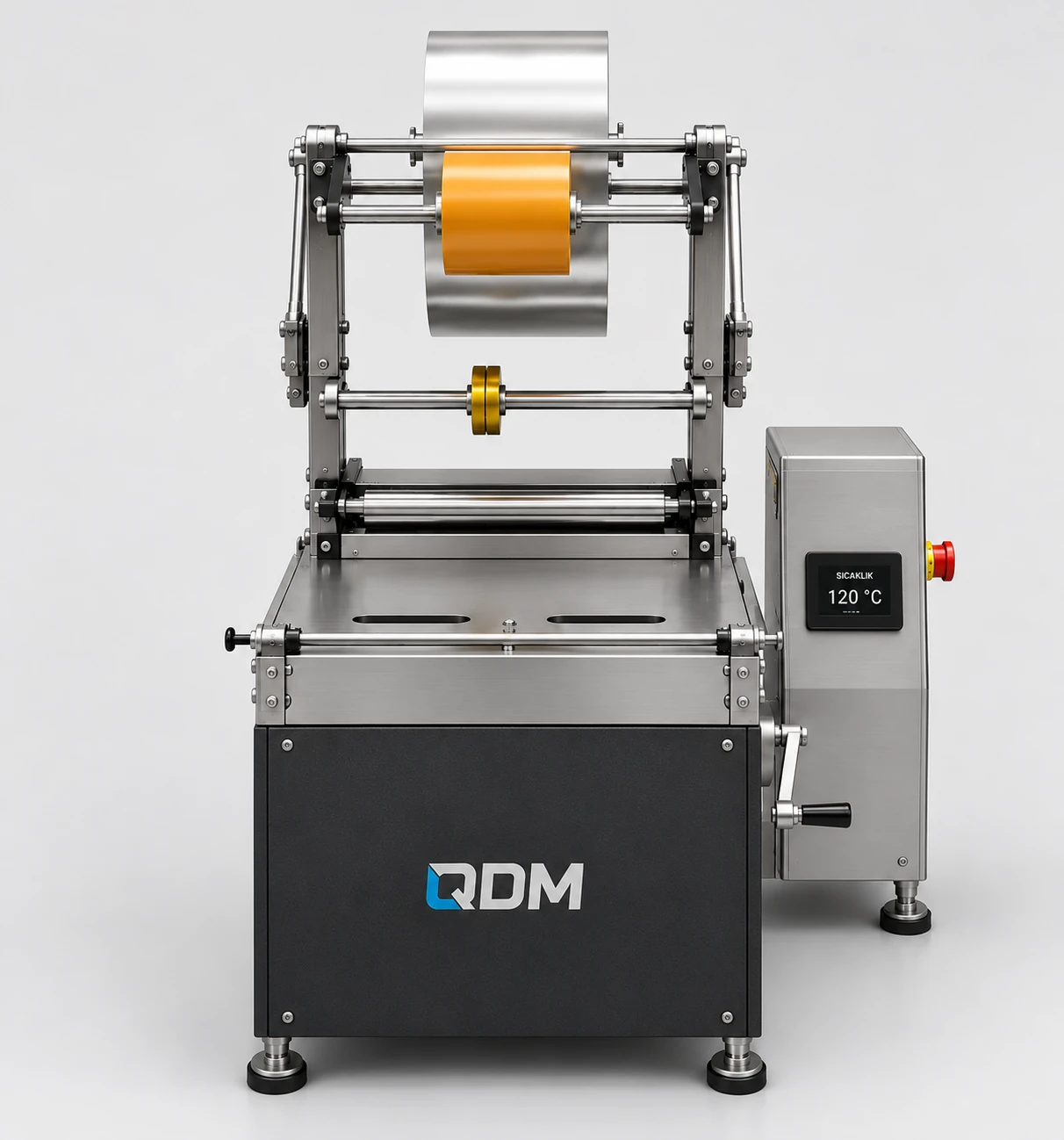
A compact semi-automatic layout for roll-fed wrapping and heat-sealing operations.
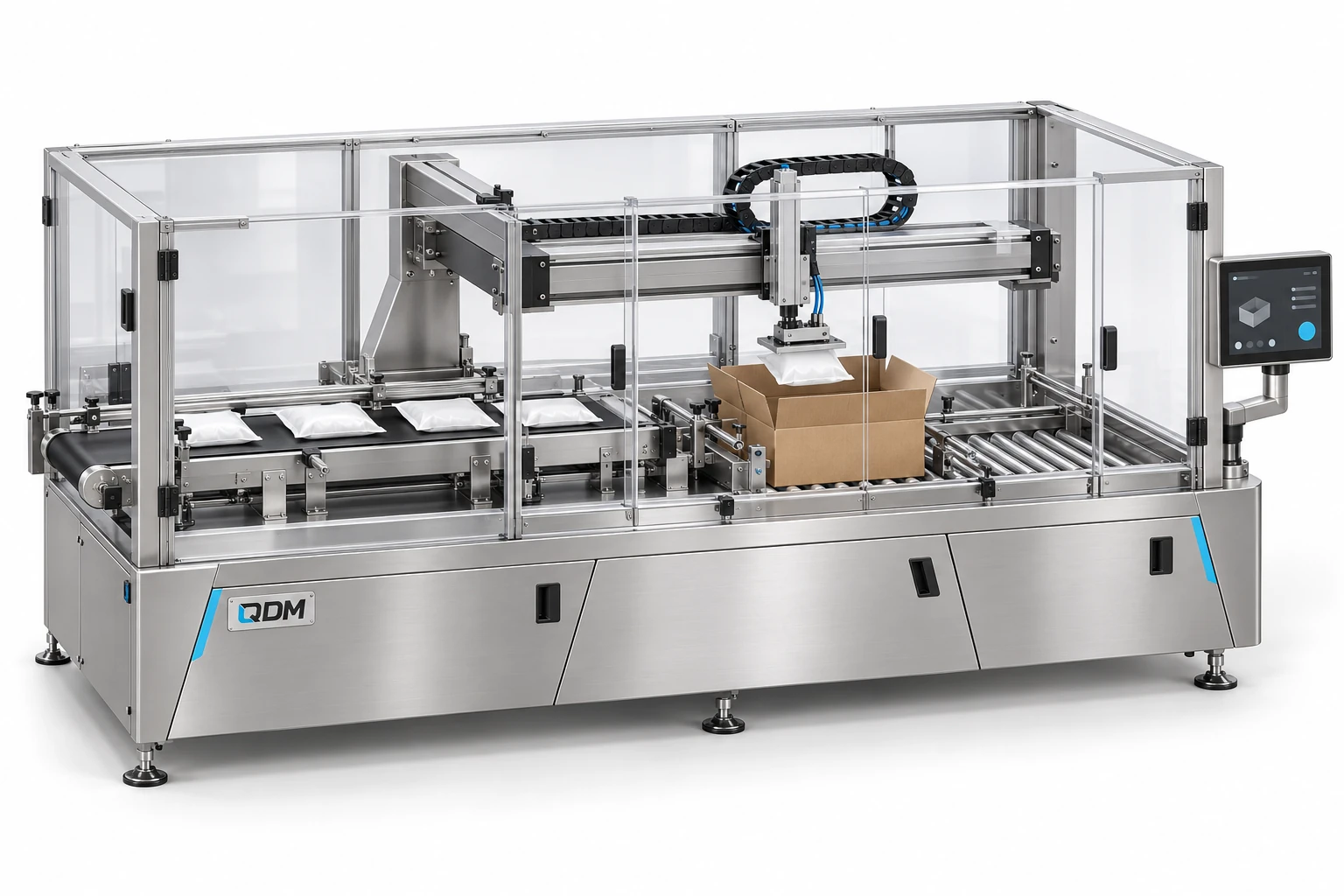
A conveyor-based case-loading layout with overhead product handling.
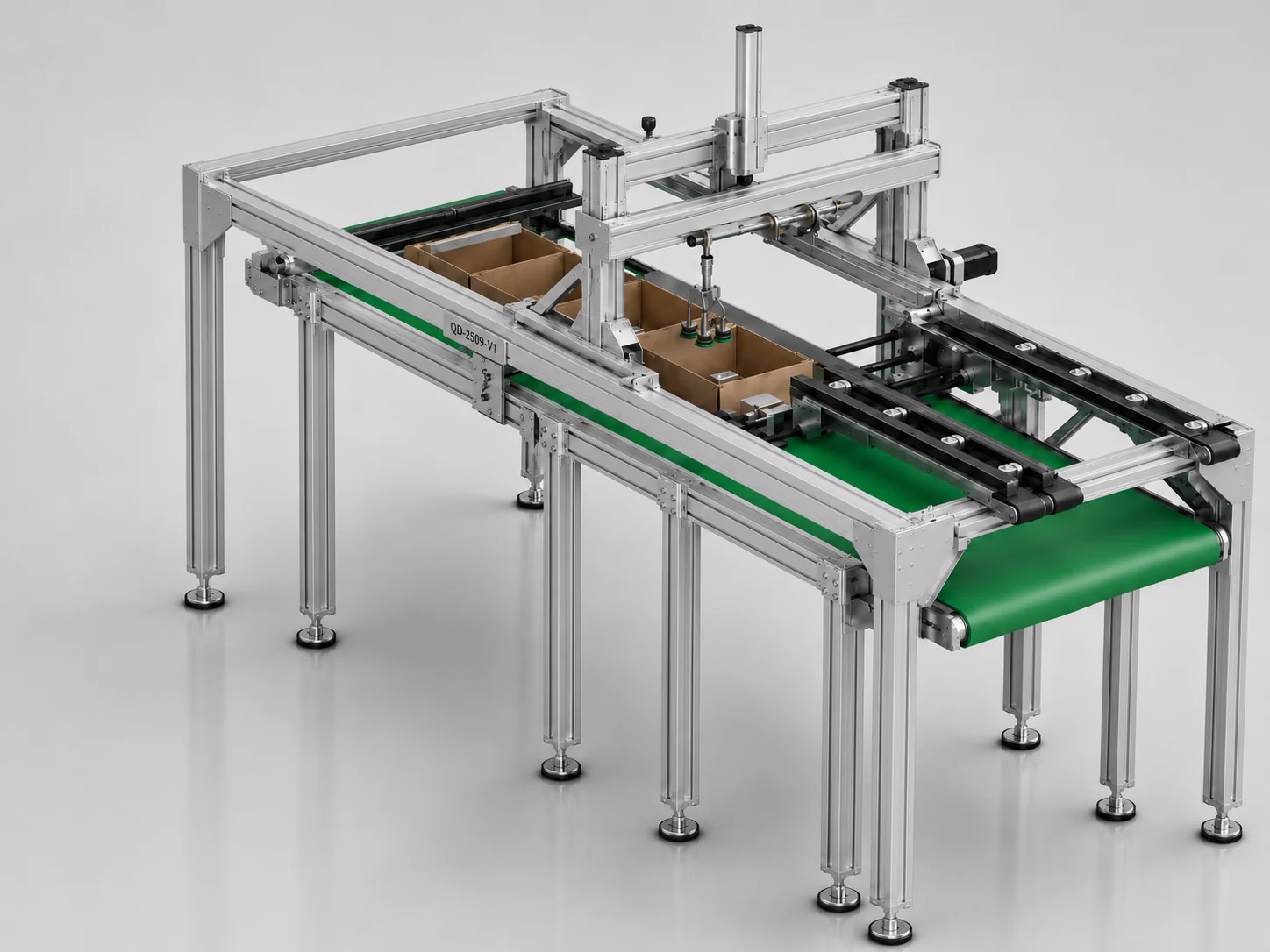
An overhead handling mechanism integrated with a belt-based workstation.