
FILLING · CLOSING · LABELLING
Fully Automatic Filling Lines
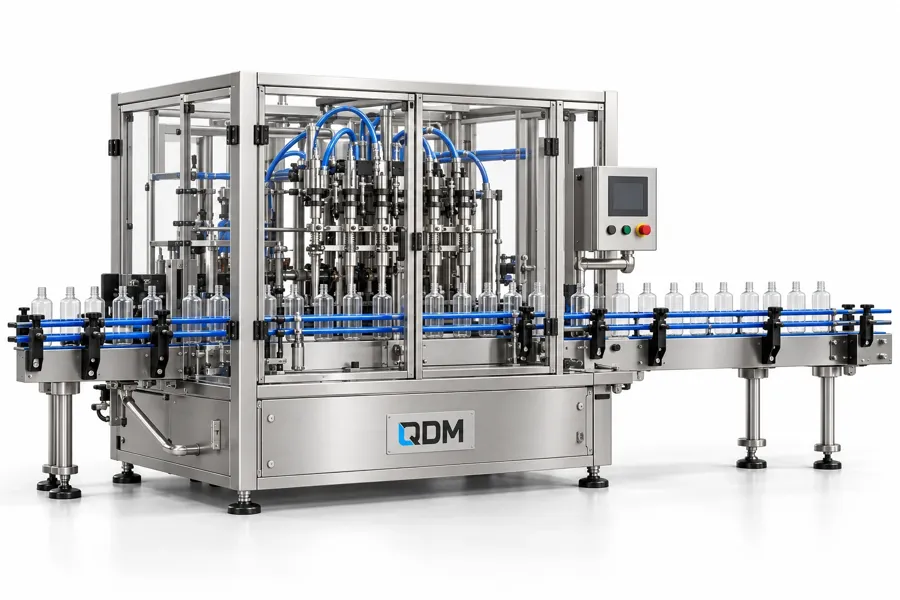
Industrial inline or rotary arrangements. Plan feeding, filling and selected downstream operations as one process scope.
Application-specific design and manufacturing in Turkey · Project support from Istanbul
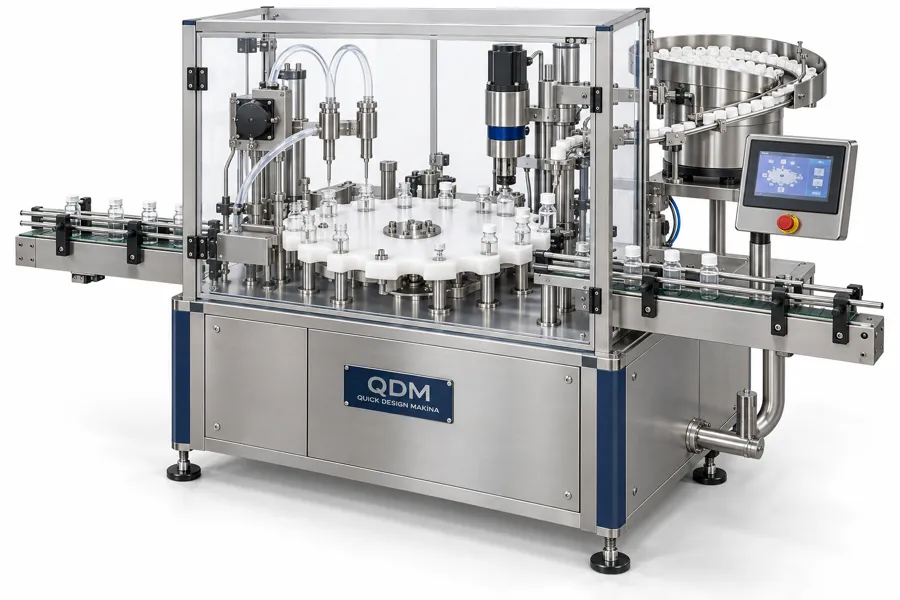
Industrial rotary
Explore the options →Manual, semi-automatic or fully automatic?
| Level | Operator involvement | System scope |
|---|---|---|
| Manual-handling device | Places the container, starts the cycle and removes the filled container. | Touchscreen or push-button device. The selected dosing arrangement controls the fill. |
| Semi-automatic | Loads and supervises the process as defined by the container flow. | Benchtop inline or rotary system, assessed with the selected additional operations. |
| Fully automatic | Supervises supply, product changes, settings and process checks. | Industrial inline or rotary arrangement with the agreed automatic handling, filling and downstream operations. |
Configuration scope
01
Product transfer & quantity control
Select the transfer pump or mechanism together with the quantity-control method. For example, a pump may transfer the product while weighing controls the dose. Review consistency, quantity and cleaning conditions.
02
Additional operations & sensors
Capping, cap and container feeding, labelling, date/batch coding and in-device sensors can be selected for the process.
03
Two-liquid blending & dosing
Two separate liquids can be processed at specified ratios or doses. Review both liquids and the operating sequence. The push-button manual-handling model excludes this feature.
04
Output & fill tolerance
Define target output, quantity and permitted variation at the start. Confirm output and tolerance through trials using the product, container, dosing method and complete operating cycle.
Container options
Glass bottle
PET bottle
Plastic containerHDPE / PP etc.
Vial / small bottle
Glass ampouleSpecial process
Jar / tub
Schematic container examples. Define suitable nozzles, handling and closure arrangements for each format; these examples do not imply compatibility with every model.
QDM / FAQ
Liquid filling machine questions
Can one machine fill different liquids?
This may be possible within a suitable product family. Pump, seals, tubing, nozzle, cleaning and adjustment range are reviewed for each liquid. Results from one formulation do not establish performance with another.
How many nozzles do I need?
Target output, filling time and container handling are considered together. If capping or feeding is the bottleneck, adding nozzles alone may not increase complete-line output by the same proportion.
How are output and filling accuracy established?
Trials are planned with the actual product, fill quantity and container. The target, permitted variation, measurement method and test conditions are defined in the quotation and acceptance plan.
Can you add filling or capping to an existing line?
An integration scope can be developed after reviewing layout, working height, container flow, cycle, controls interfaces and the condition of existing equipment.
Give your project a starting point.
Describe your requirement in six short steps. Turn your selections into an enquiry summary and add anything specific to your process.