
Bottle and closure
Define bottle geometry, closure type, product properties and changeover needs.
A modular bottling concept joining product transfer, filling and cap handling.
Enquire about this machineMachine & device catalog · Configuration agreed per project
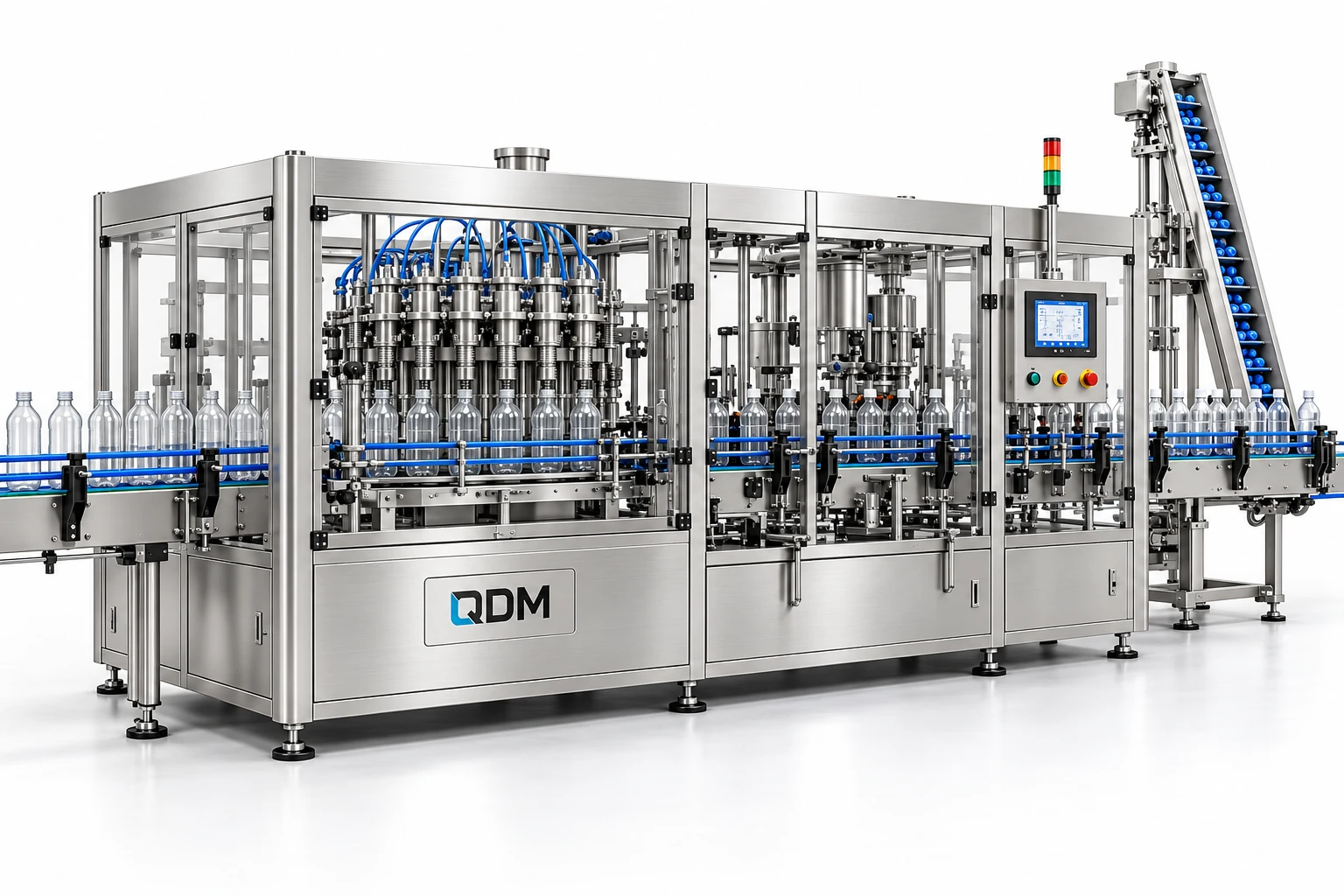
The bottling layout brings conveyor transport, a guarded filling section and cap handling into a connected process. The equipment is developed around the beverage or liquid, bottle format and closure. A project can focus on a single module or extend to the agreed line scope.
Define bottle geometry, closure type, product properties and changeover needs.
Develop the filling, capping and handling arrangements for the required sequence.
Agree utilities, cleaning requirements, controls and acceptance checks.
Materials, dimensions, operating range, output, controls and delivery scope are confirmed in the project proposal.
Use these notes to define the application before choosing the final equipment configuration.
A bottle filling and capping line connects a liquid filling task with placement and tightening or forming of a closure. Industrial bottling lines organise these functions with defined container transfers. QDM’s reference arrangement should be developed from the bottle, liquid and cap together, including how containers enter and leave the working stations.
Bottle height, opening and stability affect guides and filling access. The liquid determines the filling principle and fluid path, while the closure defines the capping tool and supply arrangement. A screw cap and a different closure type should not share an assumed mechanism. Identify format changes and whether operators or additional equipment present bottles and caps.
The first build can review fill quantity and closure quality as separate acceptance items, then check their connected operation. Agree handling of missing containers or closures and access for cleaning. Include downstream labelling or packing only if quoted. Line output is set from the complete operating cycle and the agreed formats rather than the size of the illustrated conveyor.
The table identifies the reference arrangement and the values to agree for your application.
| Parameter | Configuration / value | Confirm before manufacture |
|---|---|---|
| Bottle formats | Defined dimensions and opening | Provide samples or drawings |
| Liquid | Specified composition and properties | Review filling and cleaning method |
| Fill target | Defined in mL or g | Agree tolerance and inspection |
| Closure | Specified cap and neck interface | Define application and quality check |
| Container transfer | Configured guides and stations | Review stability and orientation |
| Changeover | Formats and adjustments as scoped | List required bottle and cap variants |
| Line objective | Agreed bottles per time | Check connected filling and capping |
These products are customizable. Configuration values and images are indicative and may change with the application. Final dimensions, components, controls and performance requirements are confirmed in the agreed project specification.
Representative CAD and generated design visualizations. These are not photographs of delivered equipment. Illustrated arrangements may change with customization; final values and visuals are confirmed in the project specification.
QDM supplies equipment with a standard one-year machine warranty, starting from commissioning.
Purchased components are covered under the relevant manufacturer’s warranty terms. Two-year component coverage applies where provided by the manufacturer; coverage and start dates follow those terms.
Extended warranty and maintenance agreements can be arranged for the project. Coverage, duration, service responsibilities and commercial terms are agreed in the contract.
The quotation and contract define the equipment covered, the applicable warranty terms and the agreed service arrangements.
Send liquid properties, bottle and cap samples, dose, output target, utilities and the proposed layout.
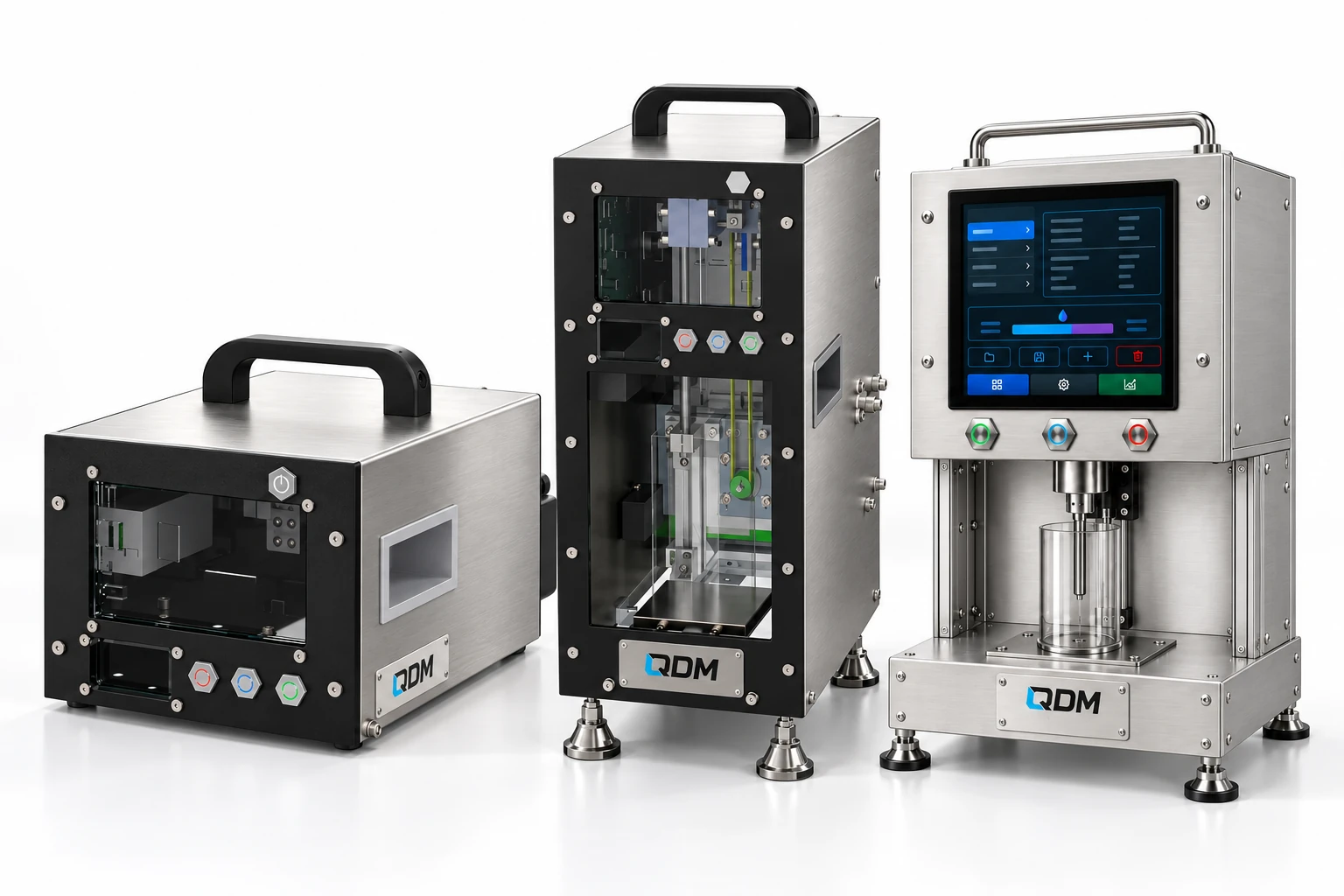
DuDose · GaDose · SoDose
A modular device family for liquid dosing, filling and application-specific mixing.
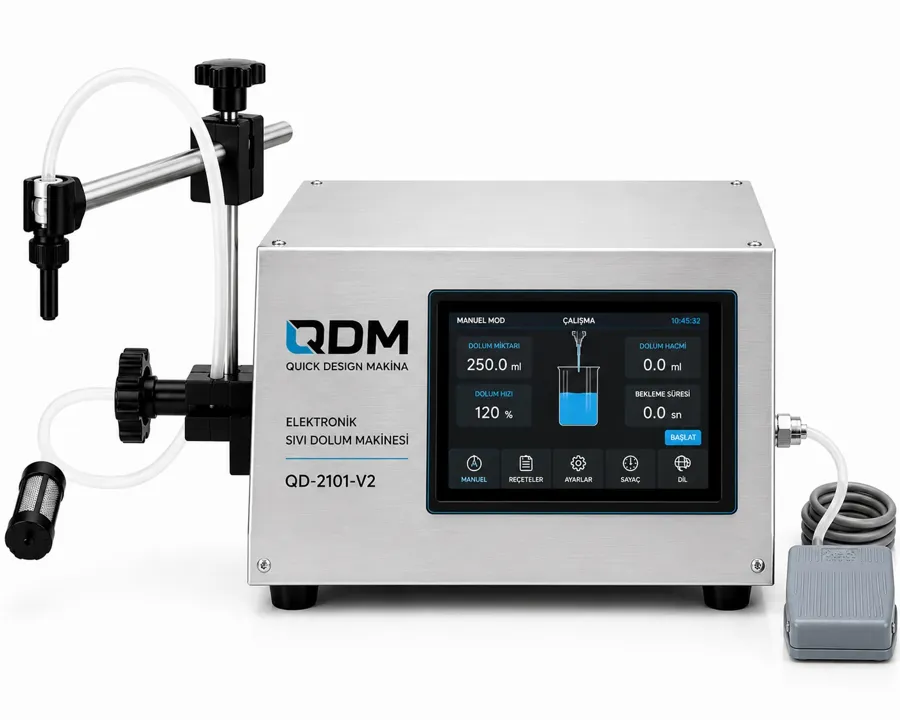
Manual container placement with touchscreen filling control.
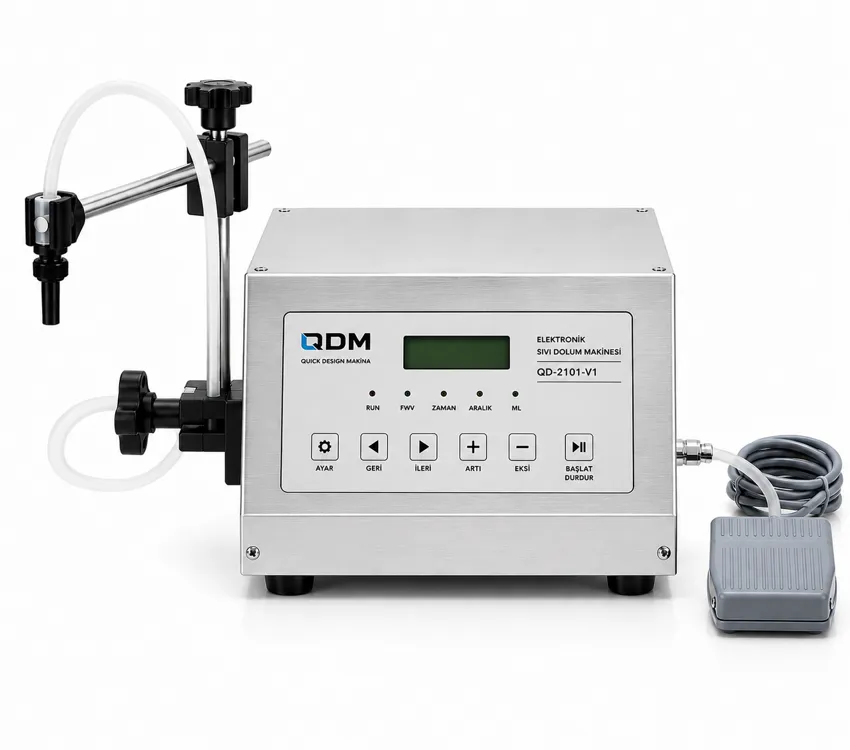
Manual container placement with push-button filling control.