
Packaging Machines
Review packaging, labelling, case packing and marking needs together. Explore machinery and integration options suited to your product, packaging and production line.
Quick Design Makina · Updated: 14 October 2026
Initial assessment
| Option / topic | Requirement | Points to assess together |
|---|---|---|
| Film / bag | Product containment and sealing | Packaging sample and seal quality |
| Cartoning | Product insertion into a box | Box opening and product arrangement |
| Case packing | Finished packs arranged in a case | Pack pattern and case handling |
| Cylindrical surface | Wrap-around / partial label | Rotation and bottle stability |
| Flat surface | Top, front or back label | Surface reference and orientation |
| Special shape | Fixture-based application | Surface access and sample trial |
| Marking / coding | Date, batch and product information | Surface, method and inspection |
Separate primary packaging from case packing
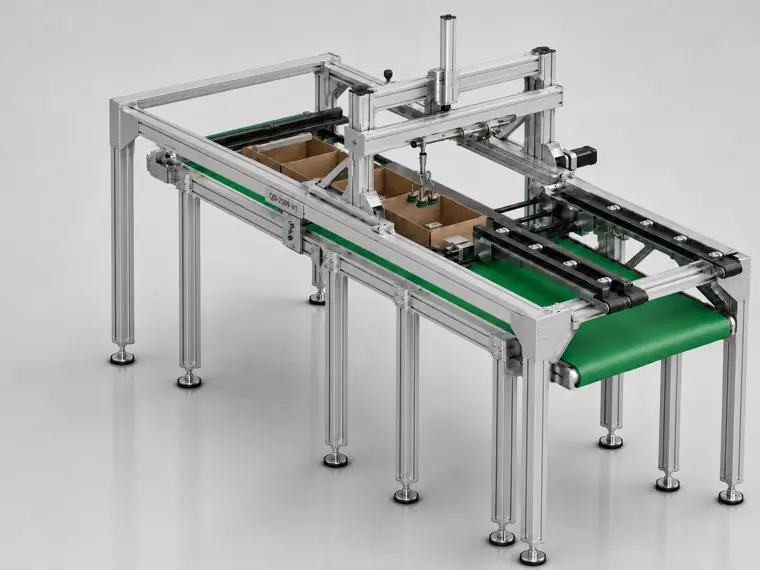
Putting a product into film, a bag or a box differs from arranging finished packs inside a shipping case. Describe filling and sealing, grouping, cartoning and case packing separately. Combining every requirement under the label “packaging machine” can leave quotation scope unclear. A finished-pack sample or drawing helps make the distinction.
Product behaviour changes the machine arrangement
Fragile, sticky, irregularly shaped or easily scratched products may not suit the same handling arrangement. Explain dimensions, weight, orientation and quantity variations. Actual film, carton and case samples should also be assessed. Opening, forming and closing behaviour matters alongside packaging dimensions.
Avoid bottlenecks at the infeed and discharge
Even with a fast packaging machine, manual product arrangement or slow case preparation can limit overall output. Define existing conveyor height, product spacing and discharge direction. Material replenishment, operator access and restarting after a fault are also part of the layout. Line compatibility is assessed with the main machine.
Define marking and coding requirements
Explain which information, such as date, batch number or product code, must be applied, on which surface, by which method and at which production stage. Include print or marking checks, product tracking and line interfaces in the first assessment when needed. Marking equipment is scoped with the labelling and packaging arrangement.
State changes between product and packaging sizes
Specify how many products and containers will run on the machine, how often changes occur and which parts need replacing. Fixtures, guides and carriers for different sizes affect price together with adjustment methods, trials and training. Required pack quality and output are checked using representative samples. An empty-running video alone is not enough to assess packaging output.
Where QDM can contribute
QDM can scope engineering and manufacturing for custom feeding, grouping, handling, case-packing mechanisms or an integrated machine. Supplier quotations can also be compared when standard equipment is required. Custom modules are considered where the product or package does not fit a standard machine. Controls and on-site integration are planned according to project scope.
Start with the label type
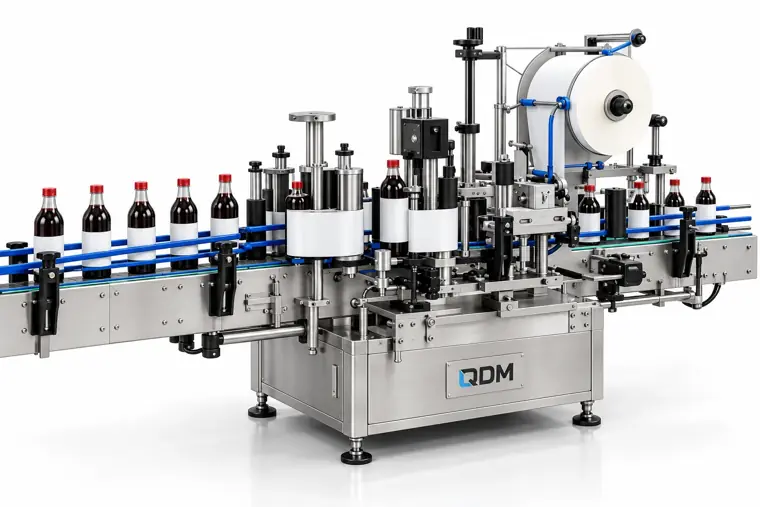
Self-adhesive labels, glue-applied labels and sleeves require different equipment. Specify label size, material, roll arrangement and application surface. Transparent labels or special surfaces may require additional assessment of detection and application conditions. Define the relative positions of front and back labels too.
Container shape determines handling
Wrap-around labelling of a round bottle, application to a flat surface and labelling an irregular part require different positioning. The container may need to remain still, rotate or present a particular face. Unstable containers, thin walls or dimensional variation can cause handling problems. Sample assessment helps identify these details.
Describe label quality in measurable terms
Instead of requesting only a “neat label”, define permissible position variation, appearance and the checking method. Wrinkles, bubbles, skewed placement and lifting edges are separate considerations. Required output is assessed using the relevant container and label. Include label-roll replacement and adjustments for different container sizes in the operating requirements.
Include coding and inspection in the scope
State date or batch printing, print inspection and rejection of unsuitable items at the outset. Conveyor height, direction and container spacing affect line interfaces. Custom fixtures, guides or carriers can be added to a standard applicator. The combined arrangement is verified through interfaces between existing and new equipment.
Prepare samples for the quotation
Send container samples, label dimensions, required position and production target. QDM can discuss standard labelling-equipment sourcing or custom handling and positioning modules. Define the main applicator, custom parts, trials and line integration separately in the quotation so the equipment used for each operation is clear.
Frequently asked questions
Can custom feeding be added to an existing packaging machine?
Machine interfaces, operating arrangements and supplier restrictions can be reviewed to assess suitability.
Can one machine package every product?
Suitability depends on the product and packaging range. Changing sizes may require adjustments or replacement fixtures, guides or carriers.
What should I send for an initial quotation?
Product and pack dimensions, packaging samples, output target and photographs of the existing line are useful starting points.
Can one machine label different bottles?
Within the agreed size and surface range, it may be possible through adjustments or replacement parts that hold and guide the bottle. Suitability should be reviewed using samples.
Can transparent labels be applied?
A compatible detection and application arrangement can be selected based on the label and backing material.
Can labelling be added to a filling line?
The arrangement can be designed with compatible line speed, container handling and controls interfaces.
Let us review your requirements.
Share your product, packaging and packaging, labelling, case-packing or marking requirement so we can assess a suitable machine and line arrangement.
Contact us