
Laboratory Machines and Devices
Machines and devices for mixing, shaking, sample handling, analysis and testing. Explore standard equipment, custom development, prototypes and preparation for production.
Quick Design Makina · Updated: 14 October 2026
Initial assessment
| Option / topic | Requirement | Points to assess together |
|---|---|---|
| Standard device | Common task and sample | Operating range and service |
| Custom accessory | Suitable device, special sample | Fixture and interface compatibility |
| Custom device | Non-standard task | Development and verification plan |
| Concept | Task and sample interfaces | Initial design direction |
| Prototype | Testing a defined function | Revision inputs |
| Production preparation | DFM / DFA and files | Repeatable manufacturing |
Describe the task rather than only a device name
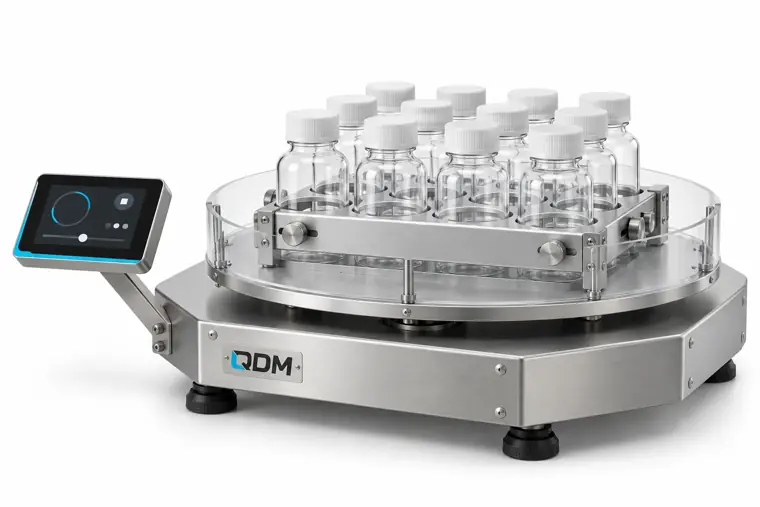
Mixing, shaking, sample handling, dosing and component testing create different requirements. Specify sample type, volume or dimensions, operating temperature and user expectations. For an orbital shaker, sample fixtures and motion requirements are assessed together. The appearance of a standard device does not describe the whole need.
Check the limits of standard equipment
Compare working area, load, adjustment range and accessories. Discuss calibration, servicing and spare-parts scope with the supplier. Models sold under the same device name may suit different tasks. Samples or a usage example help reduce the risk of choosing unsuitable equipment.
When does custom development make sense?
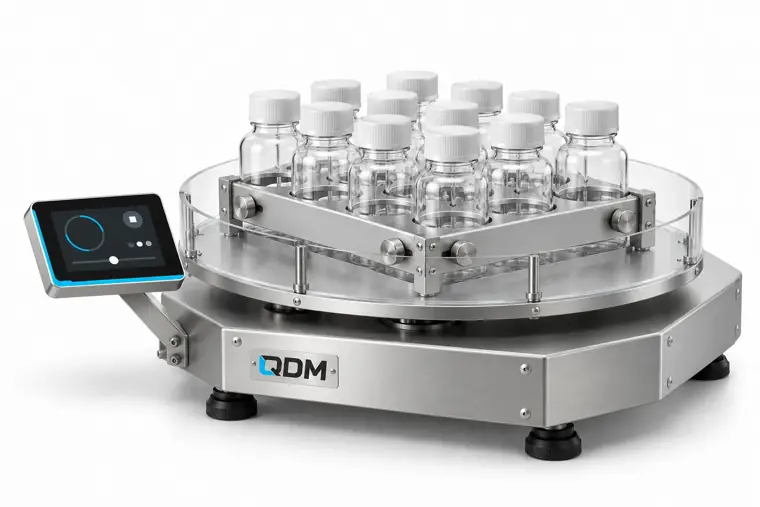
Samples that do not fit standard fixtures, a different motion arrangement or interfaces with another device may require custom development. QDM can discuss mechanical design, sample fixtures, custom enclosures and prototype manufacturing. Displays, controls and data requirements can be included with the relevant specialists. Measurement methods and verification responsibilities are defined separately.
Define what the prototype should demonstrate
The first prototype can assess motion or mechanical compatibility. Later work can examine repeatability, cleaning, usability and manufacturability. A successful mechanical trial and verification of a complete measuring instrument are different activities. Acceptance criteria are written around the intended use.
Prepare a short device brief for QDM
Share the task, sample or part, current application and required result. Comparable instruments, dimensions and controls requirements can be included when available. Standard sourcing, custom mechanical development or a turnkey device project is scoped according to the application. Mention production files and support for manufacturing at your own company at the outset if required.
Clarify the intended device function
Describe the user, sample, task and expected result. Comparable devices can be reviewed for function and usability rather than appearance alone. Working area, dimensions and existing modules are design inputs. Research devices, test equipment and devices intended for medical use should not be treated as having identical requirements.
Plan mechanical design and controls together
Develop the enclosure, sample fixtures, motion mechanism, fluid interfaces and service access. State touchscreen, controls, data recording or mobile application requirements early. These functions can be included with suitable expertise. Ownership of the measurement or analysis method and the required checks are defined separately.
Build the prototype for a defined purpose
The first prototype can assess sample positioning, motion or mechanical compatibility. Later revisions develop usability, materials and manufacturing options. Record test results with their configuration and samples. A working mechanical prototype does not demonstrate compliance with every measurement or medical-use requirement.
Develop manufacturability and assembly
Design for manufacture (DFM) considers appropriate ways to produce parts; design for assembly (DFA) considers a practical and organised assembly arrangement. Part count, sourcing, access and adjustment needs are assessed together. Prototype manufacturing methods need not remain unchanged for series production. Production quantities and facility capabilities guide later decisions.
Scope production files and handover
A purchasing list, technical drawings, 3D design files, assembly diagrams and manufacturing-method-specific files can be prepared when required. Production stages and support to help your company manufacture the device are defined in the quotation. Usage rights, confidentiality and design deliverables are discussed at the outset. For intended medical use, applicable conformity and verification activities are planned separately with responsible specialists.
Frequently asked questions
Can a single prototype be made?
A single prototype can be considered according to the development objective and scope. Subsequent production is discussed separately.
Can a touchscreen or recording be added?
Required controls and recording functions can be included with suitable expertise; delivery scope is clarified in the quotation.
Is every laboratory device a medical device?
No. Intended use and function matter; any applicable regulatory and conformity work should be assessed separately.
Can I obtain mechanical design only?
Yes, a mechanical package with defined interfaces to your electronics or software team can be discussed.
Can QDM support manufacturing at our company?
Production files, assembly information and production handover support can be included according to the requested scope.
How are patent and design usage rights arranged?
If these requirements are raised at quotation stage, suitable agreements can be made for deliverables and rights. Specialist patent-application services are defined separately.
Let us review your requirements.
Share the device task, sample and required deliverables so we can assess standard equipment, development and preparation for production together.
Contact us